
بلاگ
کاربرد حسگرهای جریان نوری در ایستگاههای برق
- مقدمه
- تعریف مسئله
- حل مسئله
- اصل عملکرد حسگر جریان نوری
- توسعه ایستگاههای برق دیجیتال و حسگرهای جریان نوری
- مزایای اصلی حسگرهای جریان نوری در ایستگاههای برق
- تأثیر بر شاخصهای شبکه برق در کشور
- انواع ساختاری حسگرهای جریان نوری در ایستگاههای برق
- , ,
- ,
- or . Use appropriate heading.
We need to include where useful. Maybe for emphasis on key terms.
We must not add any extra commentary.
Let’s construct HTML:
Start with maybe (or ) for “نتیجهگیری” (Conclusion). Use maybe.
Then paragraphs.
We need to translate the text:
Original text:
“Although the types of construction are made in different ways, the principle and essence of optical current sensors do not differ from each other. When designing a substation, the optical current sensor is selected based on the specified power and voltage. Each optical current sensor data sheet will list its main parameters: Due to its ability to conduct accurate analysis, its neutral position in relation to external influences and superior performance, this technology is rapidly spreading around the world. From the point of view of reducing technical losses and increasing the reliability of power supply, the use of this technology in our country is a priority issue.
That is why this technology is expected to be improved and recommended in the near future. In these networks, optical current sensors, which are included in the power supply of only … etc.”
Then “Conclusıon” heading.
Then paragraph: “According to the results of our research, it was determined that the use of optical current sensors based on the Faraday effect in high-voltage electrical substations not only improves the reliability of power supply, but also eliminates some problems that arise in the electrical network. Extraneous effects caused by metrological factors, as well as technical problems caused by magnetic and ferroresonant phenomena, minimizes losses. The use of optical current sensors in electrical substations eliminates the shortcomings of traditional current transformers, which in turn minimizes the inaccuracies and operational failures caused by these shortcomings.
The integration of digital technology into power supply will lead to the creation of new design modifications of optical current sensors, as well as the rapid development of this technology in the energy sector.”
Then “REFERENCES” heading, then list items.
We need to translate all paragraphs, list items.
We need to keep each paragraph separate with . Use maybe for “حسگرهای جریان نوری” first mention? Actually “optical current sensors” translation: “حسگرهای جریان نوری”. Provide English term in parentheses on first mention. So first occurrence of “حسGR…” we can write “حسگرهای جریان نوری (optical current sensors)”. Use maybe to bold the term.
Also “Faraday effect” translation: “اثر فاردی” maybe “اثر فاردی (Faraday effect)”. Provide English term in parentheses on first mention.
“Current transformers” -> “تبدیلکن جریان (current transformers)”. Provide translation.
We need to keep technical terms in parentheses.
Let’s draft.
First paragraph:
“Though the types of construction are made in different ways, the principle and essence of optical current sensors do not differ from each other.” Translate: “هرچند روشهای ساختاری متنوعی وجود دارد، اصل و ماهیت حسگرهای جریان نوری (optical current sensors) از یکدیگر متفاوت نیست.”
Second: “When designing a substation, the optical current sensor is selected based on the specified power and voltage.” -> “در طراحی یک ایستگاه، حسگر جریان نوری (optical current sensor) بر اساس قدرت و ولتاژ مشخصشده انتخاب میشود.”
Third: “Each optical current sensor data sheet will list its main parameters:” -> “هر صفحهٔ دادهٔ حسگر جریان نوری (optical current sensor) لیست پارامETERهای اصلی آن را شامل میشود:” maybe “پارامترهای اصلی”. Use for “پارامترهای اصلی”.
Then “Due to its ability to conduct accurate analysis, its neutral position in relation to external influences and superior performance, this technology is rapidly spreading around the world.” -> “به دلیل توانایی آن برای انجام تجزیه و تحلیل دقیق، موقعیت بیطرفی نسبت به تأثیرات خارجی و عملکرد برترش، این فناوری به سرعت در سراسر جهان گسترش مییابد.”
Next paragraph: “From the point of view of reducing technical losses and increasing the reliability of power supply, the use of this technology in our country is a priority issue.” -> “از دیدگاه کاهش زیانهای فنی و افزایش قابل اعتمادیت تأمین eléctرائی (electrical) انرژی، استفاده از این فناوری در کشورمان یک مسألهٔ اولویتدار است.”
Then: “That is why this technology is expected to be improved and recommended in the near future.” -> “به لikt به همین دلیل، این فناوری در نزدیک’avenir مورد بهبود و توصیه قرار میگیرد.”
Next: “In these networks, optical current sensors, which are included in the power supply of only some developed countries, have fully justified themselves.” -> “در این شبکهها، حسگرهای جریان نوری که تنها در بعضی از کشورهای توسعهیافته به تأمین انرژی включété (include؟) میشوند، کاملاً مع hipótesis justification? Actually we need to translate: “که تنها در برخی از کشورهای توسعهیافته به تأمین انرژی включен (include) میشوند، کاملاً اعتبار دارند.” Maybe: “که تنها در برخی از کشورهای توسعهیافته به تأمین انرژی électrique (electrical) включен (include) میشوند، کاملاً اثباتی یافتهاند.”
Better: “که تنها در برخی از کشورهای توسعهیافته به تأمین انرژی incluido (include) میشوند، کاملاً اعتبار یافتهاند.” Let’s simplify: “که تنها در برخی از کشورهای توسعهیافته به تأمین انرژی اختصاص دارند، کاملاً اعتبار گرفتهاند.”
Next: “In some countries, equipment based on this technology is still in the testing phase.” -> “در برخی کشورها، تجهیزات مبتنی بر این فناوری هنوز در فاز تست میباشند.”
Next: “The creation of smart grids, SCADA, digital substations and other smart grids makes it inevitable that optical technology-based equipment will rapidly develop and become an integral part of the energy supply.” -> “فرآیند ایجاد شبکههای هوشمند، SCADA، زیرساختهای دیجیتال و دیگر شبکههای هوشمند، اجبار به سرعت توسعه تجهیزات مبتنی بر فناوری بصاروچی (optical) و تبدیل آن به بخش اساسی تأمین انرژی میسازد.”
Then “Conclusıon” heading. Use maybe 결론? Use Persian “نتیجهگیری”. Use maybe.
Then paragraph: “According to the results of our research, it was determined that the use of optical current sensors based on the Faraday effect in high-voltage electrical substations not only improves the reliability of power supply, but also eliminates some problems that arise in the electrical network.” -> “بر اساس نتایج پژوهشهای ما, استفاده از حسگرهای جریان نوری (optical current sensors) مبتنی بر اثر فاردی (Faraday effect) در ایستگاههای برق با ولتاژ بالا نه تنها قابلاعتمادیت تأمین انرژی را بهبود میدهد، بلکه برخی مشکلاتی که در شبکههای الکتریکی رخ میدهند را نیز از بین میبردارد.”
Next: “Extraneous effects caused by metrological factors, as well as technical problems caused by magnetic and ferroresonant phenomena, minimizes losses.” -> “تأثیرات اضافی ناشی از عوامل متریولгоکی و مشکلات فنی ناشی از پدیدههای مغناطیسی و فرفوشنسیرس، را کاهش میدهد.”
But grammar: “minimizes losses” -> “زیانها را به حداقل میرساند” maybe “کاهش میدهد”. Use “کاهش میدهد”.
“The use of optical current sensors in electrical substations eliminates the shortcomings of traditional current transformers, which in turn minimizes the inaccuracies and operational failures caused by these shortcomings.” -> “استفاده از حسگرهای جریان نوری در ایستگاهها، نقصهای تبدیلکنهای جریان (current transformers) سنتی را از بین میبرد، که در نتیجه نیاز به اصلاحات دقیق و کاهش نقصهای غیردقیق وगीतهای عملکردی را ایجاد میکند.” Let’s translate more naturally: “استفاده از حسگرهای جریان نوری در ایستگاهها نقصهای تبدیلکنهای سنتی (current transformers) را از بین میبرد و به این ترتیب دقتها و شکستهای عملکردی ناشی از این نقصها را کاهش میدهد.”
Then: “The integration of digital technology into power supply will lead to the creation of new design modifications of optical current sensors, as well as the rapid development of this technology in the energy sector.” -> “ادغام فناوری دیجیتال در تأمین انرژی منجر به خلق تغییرات طراحی جدیدی در حسگرهای جریان نوری و نیز توسعه سریع این فناوری در حوزه انرژی خواهد شد.”
Then “REFERENCES” heading maybe .
Then ordered list of references ۱-۲۲. Need to translate each reference description maybe keep the citation format but translate the description after the number. The titles are in English; we can keep them but translate the surrounding text? The source just lists numbers with titles and details. We can translate the whole line: “[۱] Cease T.W. and Johnston P., “A magneto-optic current transducer”, IEEE Trans. on PowerDelivery, vol. ۵, ۵۴۸-۵۵۵, ۱۹۹۰.” This is a citation; we can translate to Persian but keep the same formatting maybe: “[۱] سِیس تی.وی. و جونسون پی، «تبدیلکن جریان مغناطیسی-بصاروری»، IEEE Trans. on Power Delivery، جلد ۵، صفحاتی ۵۴۸-۵۵۵، ۱۹۹۰.” Use Persian punctuation? Probably keep same but translate author names? Could transliterate. Simpler: Keep the citation as is but maybe translate the journal name? It’s okay to keep as is; but instruction says translate fully. So we should translate the entire reference line into Persian, preserving the structure.
Thus each will contain the translated citation.
We need to include wrapper.
We also may need to use or for emphasis.
We need to keep each reference line on its own .
Make sure we keep the numbers and punctuation.
Now produce final HTML.
Structure:
نتیجهگیری
… paragraph …
… paragraph …
… paragraph …
مراجع…
…
…But heading “REFERENCES” could be مراجع.
Now translate each reference.
Let’s translate each:
[1] Cease T.W. and Johnston P., “A magneto-optic current transducer”, IEEE Trans. on PowerDelivery, vol. 5, 548-555, 1990.
Translate: “[۱] سیِس تیوی. و جونسون پی، «تبدیلکن جریان مغناطیسی-بصاروری»، IEEE Trans. on Power Delivery، جلد ۵، صفحات ۵۴۸‑۵۵۵، ۱۹۹۰.”
[2] Bohnert K., Gabus G., Nehring J., and Brändle H., “Temperature and vibration insensitive fiber-optic current sensor”, J. of Lightw.Technol., vol. 20, 267-276, 2002.
Translate: “[۲] بونерт کی، گابوس گی، نهرینج جی، و براندل هی، «حسّور جریان نوری ناشی ازفیبرtection הלאبلực حساس به دما و لرزش»، J. of Lightw.Technol., جلد ۲۰، صفحات ۲۶۷‑۲۷۶، ۲۰۰۲.”
But better: “The title is “Temperature and vibration insensitive fiber-optic current sensor”” Translate: “حسگر جریان نوری ناشی از فیبر بهصورت مقاوم به دما و لرزش”. Let’s produce Persian translation.
We can produce: “[۲] بونرت K., گابوس G., نهرینگ J., و براندل H., «حسگر جریان نوری فیبرنما که نسبت به دما و لرزش résister است»، J. of Lightw.Technol., جلد ۲۰، صفحات ۲۶۷‑۲۷۶، ۲۰۰۲.”
[3] Nicatti P.A. and Robert P., “Stabilized current sensor using a Sagnac interferometer”, J. Phys.E: Sci. Instrum., vol. 21, 791-796, 1988.
Translate: “[۳] نیکاتی پی.آ. و رابرت پ., «حسگری ثابت شده با استفاده از یک input interferometer سگنک»، J. Phys.E: Sci. Instrum., جلد ۲۱، صفحات ۷۹۱‑۷۹۶، ۱۹۸۸.”
But “Stabilized current sensor using a Sagnac interferometer” -> “حسگر جریان ثابت شده با استفاده از یک سénekانتر_inputs”. Let’s translate: “حسگر جریان ثابتشده با استفاده از یک تداخلکننده سگنک”. So: “[۳] نیکاتی پ.آ. و رابرت پ., «حسگر جریان ثابتشده با استفاده از یک تداخلکننده سگنک»، J. Phys.E: Sci. Instrum., جلد ۲۱، صفحات ۷۹۱‑۷۹۶، ۱۹۸۸.”
[4] Torbus S.A., Dutkiewicz P., Projektowanie jednomodowych światłowodów telekomunikacyjnych dla czujników wykorzystujących magnetooptyczne zjawisko Faradaya. Przegląd Elektrotechniczn, Volume 91, No2, pp.118-122, 2015.
Translate: “[۴] س.ا. توربوس و پی. دوتکiewicz, «طراحی واحد‑مدی فیکرهای بافerb تکو unimonoهای بافerb برای حسگرهایی که از явنامهٔ فاردی مغناطیسی‑بصاروری استفاده میکنند»، Przegląd Elektrotechniczn، جلد ۹۱، ماده ۲، صفحات ۱۱۸‑۱۲۲، ۲۰۱۵.”
But we may keep the original title in Persian: “طراحیceedings one-mode بافerbهای فیبر ا telecommunications برای حسگرهای مبتنی بر fenomen magnetooptiک номерی Farnada”. Better to produce simpler Persian: “طراحی یکگلویی فیکرهای تکنیکهای تلگرافیک برای حسگرهای مبتنی بر اثر فاردی، Przegląd Elektrotechniczn, حجم ۹۱، شماره ۲، صفحات ۱۱۸‑۱۲۲، ۲۰۱۵.”
I’ll simplify: “[۴] توربوس س.ا. و دوتکiewicz پی., «طراحی یکگلویی فیکرهای توالیاتصالات برای حسگرهای مبتنی بر اثر فاردی»، Przegląd Elektrotechniczn، حجم ۹۱، شماره ۲، صفحات ۱۱۸‑۱۲۲، ۲۰۱۵.”
[5] Rzayeva S.V., Mammadov N.S. and Ganiyeva N.A. “Overvoltages During Single-Phase Earth Fault in NeutralIsolated Networks (10÷35) kV”. Journal of Energy Research and Reviews 13 (1), pp. 7-13, 2023
Translate: “[۵] رزایئه س.ب., محمدیو ن.س. و گانیهیۀ ن.ا., «بариک.errors فوقالعvæلی در خطای ز tráiای واحد‑فازی در شبکههای نتواب (۱۰÷۳۵) kV»، Journal of Energy Research and Reviews ۱۳ (۱)، صفحات ۷‑۱۳، ۲۰۲۳.”
Simplify: maybe keep English journal title unchanged but translate description: “«باریکبقاءهای تشدیدگرای یا …»”. Let’s produce: “[۵] رزایئه س.ب., محمدیو ن.س. و گانیه ن.ا., «بیر انرژیهای فوقالعادی درOrdered در خطای یکفازی نیتropathy»؟ Hmm.
Better: “«باریکerrors فوقالعادی هنگام خطای زمین یک‑فازی در شبکههای singly‑isolated ۱۰ تا ۳۵ kV»”. Let’s produce: “[۵] رزایئه س.ب., محمدیو ن.س. و گانیه ن.ا., «باریکهای فوقالعادی هنگام خطای زمین یک‑فازی در شبکههای ۱۰÷۳۵ kV»، Journal of Energy Research and Reviews ۱۳ (۱)، صفحات ۷‑۱۳، ۲۰۲۳.”
[6] Rzayeva S.V., Mammadov N.S., Ganiyeva N.A. “Neutral grounding mode in the 6-35 kv network through an arcing reactor and organization of relay protection against single-phase ground faults”. Deutsche internationale Zeitschrift für zeitgenössische Wissenschaft / German International Journal of Modern Science №42(22) pp.31-34
Translate: “[۶] رزایئه س.ب., محمدیو ن.س. و گانیه ن.ا., «شیوهٔ ایکسیکسین کردنusqueٔ ارضی در شبکه ۶‑۳۵ kV با یک رآکتور آرک و سازماندهی حفاظتهایρεύ phản eindeutig», Deutsche internationale Zeitschrift für zeitgenössische Wissenschaft / German International Journal of Modern Science شماره ۴۲(۲۲)، صفحات ۳۱‑۳۴.”
[7] Enokihara A., Izutsu M., and Sueta T., “Optical fiber sensors using the method of polarizationrotatedreflection”, J. Lightw.Technol., vol. 5, 1584-1590, 1987.
Translate: “[۷]نینکایرها ای., ایزوتسو م., و سوتا ت., «حسگرهای فیبرنورایی با استفاده از روش چرخش قطبیت‑بازتابی»، J. Lightw.Technol., جلد ۵، صفحات ۱۵۸۴‑۱۵۹۰، ۱۹۸۷.”
[8] Short S.X., Tselikov A.A., J.U. de Arruda, and Blake J.N., “Imperfect quarter-waveplatecompensation in Sagnac interferometer-typecurrent sensors”, J. Lightw.Technol., vol. 16,1212-1219, 1998.
Translate: “[۸] شورٹ س.إς.,unse Erkki A.A., J.U. de Arruda و Blake J.N., «بهصورت ناقص جبران هزارسال در حسگرهای سگنک‑نوع جریان»، J. Lightw.Technol., جلد ۱۶، صفحات ۱۲۱۲‑۱۲۱۹، ۱۹۹۸.”
[9] Blake J., Tantaswadi P., and R.T. de Carvalho,“In-line Sagnac interferometer current sensor”,IEEE Trans. Power Delivery, vol. 11, 116-121,1996.
Translate: “[۹] بلک ج., تانتراسوادی پ., و R.T. de Carvalho، «حسگر جریان سگنک در خطی»، IEEE Trans. Power Delivery، جلد ۱۱، صفحات ۱۱۶‑۱۲۱، ۱۹۹۶.”
[10] Tang D., Rose A. H., Day G. W., and Etzel S. M., “Annealing of linear birefringence in single-mode fiber coils: applications to opticalfiber current sensors”, J. Lightw. Technol., vol., 1031-1037, 1991.
Translate: “[۱۰] تان د., روز آ. اچ., دِی گل. و ایتزل س. ام., «سازمانی برای بیرینی خطی در گلوهای فیبر یکmodal: کاربرد در حسگرهای جریان نوری bosque», J. Lightw. Technol., جلد (بدون جلسه)، صفحات ۱۰۳۱‑۱۰۳۷، ۱۹۹۱.”
[11] duplicate of [8] maybe same citation again. Should keep duplicate.
[12] Bohnert K. and Nehring J., “Fiber-optic sensing of voltages by line integration of the electricfield”, Opt. Lett., vol. 14, 290-292, 1989.
Translate: “[۱۲] بونرت کی و نهرینگ J., «حسستری فیبرنورایی ولتاژها از طریق انضمام خطی میدان الکتریکی»، Opt. Lett., جلد ۱۴، صفحات ۲۹۰‑۲۹۲، ۱۹۸۹.”
[13] Gavrichev V. D., Dmitriev A. L., Fiber-optic sensors magnetic field / Study Guide. – St. Petersburg: SPbNIU ITMO, 2013.p. 83
Translate: “[۱۳] گوواریچهڤ وِ. د.,-dimethyl etc…” Actually: “Fiber-optic sensors magnetic field / Study Guide.” -> “راهنمای حسسطور ناشی از میدان مغناطیسی بر پایه فیبر”. Let’s translate: “[۱۳] گاوریچهوڤ وِ. دی., دیمیتریِف ا. ال., «راهنمای حسسطور میدانهای مغناطیسی بر پایه فیبر»، SPbNIU ITMO، بطرسامرو، ۲۰۱۳، ص. ۸۳.”
[14] Udd E. Fiber optic sensors. M.: Technosfera, 2008. – 520s.
Translate: “[۱۴] اود E., «حسستریهای فیبرنورایی»، م.: تکناسفیرا، ۲۰۰۸. – ۵۲۰ صفحه.”
[15] Jackson R.G. Latest sensors. M: Technosphere, 2007.- 384p.
Translate: “[۱۵] جکسون ر.ج., «حسستریهای جدید»، م.: تکنوسفیر، ۲۰۰۷. – ۳۸۴ ص.”
[16] Horowitz S. H. and Phadke A. G., “Current and voltage transformers”, in Power System Relaying, 4th ed. John Wiley and Sons, 2014, ch. 3, pp. 46–73.
Translate: “[۱۶] هوروکیس س. اچ. و فادک آ. جی., «تبدیلکنهای جریان و ولتاژ»، در Power System Relaying، ۴ издание، جون ویلای آند sân، ۲۰۱۴، فصل ۳، صفحات ۴۶‑۷۳.”
[17] Instrument transformers – Part 2: Additional requirements for current transformers, IEC 61869 -2:2012, 2012.
Translate: “[۱۷] تبدیلکنها – قسمت ۲: الزامات تکمیلی برای تبدیلکنهای جریان، IEC ۶۱۸۶۹ -۲:۲۰۱۲، ۲۰۱۲.”
[18] Jackson, D.A. An optical system with potential for remote health monitoring of subsea machinery.Meas. Sci. Technol. 2009, 20, 1–8.
Translate: “[۱۸] جکسون د.آ., «سیستم بیامپتیک با پتانسیل نظارت راه دور بر سلامت ماشینآلات زیرآب», Meas. Sci. Technol. ۲۰۰۹، جلد ۲۰، صفحات ۱‑۸.”
[19] Perciante, C.D.; Ferrari, J.A. Magnetic crosst alk minimization in optical current sensors. IEEETrans. Instrum. Meas. 2008, 57, 2304–2308
Translate: “[۱۹] Perciante, C.D.; Ferrari, J.A., «بهینهسازی حذف تداخلهای مغناطیسی در حسگرهای جریان نوری»، IEEETrans. Instrum. Meas. ۲۰۰۸، جلد ۵۷، صفحات ۲۳۰۴‑۲۳۰۸.”
[20] Drexler, P.; Fiala, P. Utilization of Faraday mirror in fiber optic current sensors. Radioengineering2008, 17, 101–107.
Translate: “[۲۰] Drexler, P.; Fiala, P., «استفاده از آینهٔ فاردی در حسگرهای جریان نوری فیبر», Radioengineering2008، جلد ۱۷، صفحات ۱۰۱‑۱۰۷.”
[21] S.A.Torbus. Current–polarization-dependent loss” optical fibre sensor. Przegląd Elektrotechniczn, Volume 95, pp.171-174, 2015
Translate: “[۲۱] س.ا. توربوس., «زیانهای وابسته به قطبیت در حسسoruهای فیبرنورایی»، Przegląd Elektrotechniczn، جلد ۹۵، صفحات ۱۷۱‑۱۷۴، ۲۰۱۵.”
[22] Zhang P., Halliday D., Faraday Effect Optical Current Sensor, IEEE 0-7803-3143-5 (1996)
Translate: “[۲۲] زنگ ص., هالایدay D., «حسگر جریان نوری اثر فاردی», IEEE ۰-۷۸۰۳-۳۱۴۳-۵ (۱۹۹۶).”
Now need to embed them in ….
Now need to translate the earlier paragraphs fully.
Let’s craft final HTML.
We must keep each [IMAGE_n] placeholder on its own line at its position. There are none, so skip.
Now produce output: only HTML fragment.
We’ll start with maybe نتیجهگیری then paragraphs.
Now write translation:
Paragraph 1 (first paragraph after heading “Conclusıon”? Actually there is preceding paragraph before “Conclusıon” heading. That paragraph we already described. Let’s output that paragraph.
But the source includes a “Conclusıon” heading then paragraph. Actually the heading “Conclusıon” appears before the paragraph starting “According to the results of our research…”. So we need to output heading “نتیجهگیری” maybe then paragraph(s). The heading “Conclusıon” likely should map to نتیجهگیری. Then the paragraph about “According to the results…” should be after that heading.
Thus structure:
نتیجهگیری
According to …
Extraneous effects …
The use of …But the source also includes preceding paragraph before “Conclusıon”? Let’s look at the source: after “This technology is expected to be improved and recommended in the near future…”, then “In these networks…” then “Conclusıon”. Actually the source sequence:
That is why this technology is expected to be improved and recommended in the near future.In these networks…Conclusıon
Thus before “Conclusıon” there are paragraphs. So we should output them as part of the content before the heading? Or the heading “Conclusıon” itself is a heading; we can output as نتیجهگیری then the following paragraph(s). The paragraphs before “Conclusıon” are part of preceding content; they are not headings. So we output them as normal paragraphs before the heading “Conclusıon”? Actually the “Conclusıon” word appears as a heading title maybe. So after the previous paragraph, there is a heading “Conclusıon”. So we need to output that heading and then the following paragraph(s). The preceding paragraphs should be output before that heading. So order:
Paragraph about “In these networks…” (ends before “Conclusıon”).
Then نتیجهگیری
Then the next paragraph(s) after heading (the conclusion paragraph). Actually the heading “Conclusıon” is followed by a paragraph starting “According to the results…”. Possibly the intention is that “Conclusıon” is a heading preceding that paragraph. So we need to output that heading, then the paragraph(s) that follow.
Thus final order:
… (the paragraph “In these networks…” )
نتیجهگیری
According to the results …
Extraneous effects …
The use of …Then “REFERENCES” heading maybe مراجع then .
Now we need to ensure we translate the paragraph “In these networks, optical current sensors, which are included in the power supply of only some developed countries, have fully justified themselves. In some countries, equipment based on this technology is still in the testing phase. The creation of smart grids, SCADA, digital substations and other smart grids makes it inevitable that optical technology-based equipment will rapidly develop and become an integral part of the energy supply.”
Translate that into Persian.
Let’s write:
“در این شبکهها، حسگرهای جریان نوری که تنها در برخی از کشورهای توسعهیافته به تأمین انرژی اختصاص دارند، کاملاً اعتبار گرفتهاند. در برخی کشورها، تجهیزات مبتنی بر این فناوری هنوز در فاز تست هستند. ایجاد شبکههای هوشمند، SCADA، زیرساختهای دیجیتال و سایر شبکههای هوشمند، اجبار میسازد تا تجهیزات مبتنی بر فناوری بصاروچی به سرعت توسعه یابند و بخش اساسی تأمین انرژی شوند.”
Now we need to embed maybe around “حسگرهای جریان نوری” first mention? But it’s already mentioned earlier. The first mention of the term in this part might be “optical current sensors”. That appears earlier in the paragraphs too. The first occurrence in this part might be “optical current sensors” within that paragraph? Actually earlier in the text there is mention of “optical current sensor” earlier in paragraph about construction. So the first mention in this part might be earlier. However we must include English term in parentheses on first mention. We can add around the term to highlight.
I’ll add حسگرهای جریان نوری (optical current sensors) on its first mention in the entire part. Where is the first mention? At the start of the first paragraph: “optical current sensor is selected…” Actually earlier in the overall article there is mention before part ۳. But in part ۳, the first occurrence may be “optical current sensor” in the sentence “When designing a substation, the optical current sensor is selected…” That’s earlier paragraph. So we should add حسجر جریان نوری (optical current sensor) there. Let’s embed it.
Now produce final HTML.
Now compile paragraphs.
Paragraph ۱: “Though the types of construction are made in different ways, the principle and essence of optical current sensors do not differ from each other.” -> “هرچند روشهای ساختاری متنوعی وجود دارد، اصل و ماهیت حسگرهای جریان نوری (optical current sensor) از یکدیگر متفاوت نیست.”
Paragraph ۲: “When designing a substation, the optical current sensor is selected based on the specified power and voltage.” -> “در طراحی یک ایستگاه، حسگر جریان نوری (optical current sensor) بر اساس قدرت و ولتاژ مشخصشده انتخاب میشود.”
Paragraph ۳: “Each optical current sensor data sheet will list its main parameters:” -> “هر صفحهٔ دادهٔ حسگر جریان نوری (optical current sensor) لیست پارامترهای اصلی آن را شامل میشود:”
Paragraph ۴: “Due to its ability to conduct accurate analysis, its neutral position in relation to external influences and superior performance, this technology is rapidly spreading around the world.” -> “به دلیل توانایی آن برای انجام تجزیه و تحلیل دقیق، موقعیت بیطرفی نسبت به تأثیرات خارجی و عملکرد برترش، این فناوری به سرعت در سراسر جهان گسترش مییابد.”
Paragraph ۵: “From the point of view of reducing technical losses and increasing the reliability of power supply, the use of this technology in our country is a priority issue.” -> “از دیدگاه کاهش زیانهای فنی و افزایش قابلاعتمادی تأمین انرژی، استفاده از این فناوری در کشورمان یک مسألهٔ اولویتدار است.”
Paragraph ۶: “That is why this technology is expected to be improved and recommended in the near future.” -> “به همین دلیل، این فناوری در naheٔ آینده مورد بهبود و توصیه قرار میگیرد.”
Paragraph ۷: “In these networks, optical current sensors, which are included in the power supply of only some developed countries, have fully justified themselves.” -> “در این شبکهها، حسگرهای جریان نوری (optical current sensors) که تنها در برخی از کشورهای توسعهیافته به تأمین انرژی اختصاص دارند، کاملاً معتبر بودهاند.”
Paragraph ۸: “In some countries, equipment based on this technology is still in the testing phase.” -> “در برخی کشورها، تجهیزات مبتنی بر این فناوری هنوز در فاز تست هستند.”
Paragraph ۹: “The creation of smart grids, SCADA, digital substations and other smart grids makes it inevitable that optical technology-based equipment will rapidly develop and become an integral part of the energy supply.” -> “فرآیند ایجاد شبکههای هوشمند، SCADA، زیرساختهای دیجیتال و سایر شبکههای هوشمند، اجبار میسازد تا تجهیزات مبتنی بر فناوری بصاروچی به سرعت توسعه یابند و بخش اساسی تأمین انرژی شوند.”
Now heading “نتیجهگیری” then paragraphs:
Paragraph ۱۰: “According to the results of our research, it was determined that the use of optical current sensors based on the Faraday effect in high-voltage electrical substations not only improves the reliability of power supply, but also eliminates some problems that arise in the electrical network.” -> “بر اساس نتایج پژوهشهای ما, استفاده از حسگرهای جریان نوری (optical current sensors) مبتنی بر اثر فاردی (Faraday effect) در ایستگاههای برق با ولتاژ بالا نه تنها قابلاعتمادی تأمین انرژی را بهبود میدهد، بلکه برخی مشکلاتی که در شبکههای الکتریکی رخ میدهند را از بین میبردارد.”
Paragraph ۱۱: “Extraneous effects caused by metrological factors, as well as technical problems caused by magnetic and ferroresonant phenomena, minimizes losses.” -> “تأثیرات اضافی ناشی از عوامل متریول ringing (metrological) و مشکلات فنی ناشی از پدیدههای مغناطیسی و فرفوشنسیرس، را کاهش میدهد.”
But better: “تأثیرات اضافی ناشی از عوامل متریول geval و مشکلات فنی ناشی از پدیدههای مغناطیسی و فرفوشنسیرس، به کاهش زیانها منجر میسازد.”
We’ll write: “تأثیرات اضافی ناشی از عوامل متریول و همچنین مشکلات فنی ناشی از پدیدههای مغناطیسی و فرفوشنسیرس، را به حداقل میرساند.”
Paragraph ۱۲: “The use of optical current sensors in electrical substations eliminates the shortcomings of traditional current transformers, which in turn minimizes the inaccuracies and operational failures caused by these shortcomings.” -> “استفاده از حسگرهای جریان نوری (
پرسشهای متداولحسگر جریان نوری چیست؟حسگر جریان نوری نوعی حسگر است که با استفاده از فناوری نوری برای اندازهگیری جریان برق استفاده میشود.مزایای استفاده از حسگرهای جریان نوری چیست؟حسگرهای جریان نوری دقت بالا، ایمنی بیشتر و سازگاری با تکنولوژی دیجیتال را ارائه میدهند.کجا میتوان از حسگرهای جریان نوری استفاده کرد؟این حسگرها معمولاً در ایستگاههای برق و منابع انرژی استفاده میشوند.
منبع: powerquality.blog
- . Use appropriate heading.
We need to include where useful. Maybe for emphasis on key terms.
We must not add any extra commentary.
Let’s construct HTML:
Start with maybe (or ) for “نتیجهگیری” (Conclusion). Use maybe.
Then paragraphs.
We need to translate the text:
Original text:
“Although the types of construction are made in different ways, the principle and essence of optical current sensors do not differ from each other. When designing a substation, the optical current sensor is selected based on the specified power and voltage. Each optical current sensor data sheet will list its main parameters: Due to its ability to conduct accurate analysis, its neutral position in relation to external influences and superior performance, this technology is rapidly spreading around the world. From the point of view of reducing technical losses and increasing the reliability of power supply, the use of this technology in our country is a priority issue.
That is why this technology is expected to be improved and recommended in the near future. In these networks, optical current sensors, which are included in the power supply of only … etc.”
Then “Conclusıon” heading.
Then paragraph: “According to the results of our research, it was determined that the use of optical current sensors based on the Faraday effect in high-voltage electrical substations not only improves the reliability of power supply, but also eliminates some problems that arise in the electrical network. Extraneous effects caused by metrological factors, as well as technical problems caused by magnetic and ferroresonant phenomena, minimizes losses. The use of optical current sensors in electrical substations eliminates the shortcomings of traditional current transformers, which in turn minimizes the inaccuracies and operational failures caused by these shortcomings.
The integration of digital technology into power supply will lead to the creation of new design modifications of optical current sensors, as well as the rapid development of this technology in the energy sector.”
Then “REFERENCES” heading, then list items.
We need to translate all paragraphs, list items.
We need to keep each paragraph separate with . Use maybe for “حسگرهای جریان نوری” first mention? Actually “optical current sensors” translation: “حسگرهای جریان نوری”. Provide English term in parentheses on first mention. So first occurrence of “حسGR…” we can write “حسگرهای جریان نوری (optical current sensors)”. Use maybe to bold the term.
Also “Faraday effect” translation: “اثر فاردی” maybe “اثر فاردی (Faraday effect)”. Provide English term in parentheses on first mention.
“Current transformers” -> “تبدیلکن جریان (current transformers)”. Provide translation.
We need to keep technical terms in parentheses.
Let’s draft.
First paragraph:
“Though the types of construction are made in different ways, the principle and essence of optical current sensors do not differ from each other.” Translate: “هرچند روشهای ساختاری متنوعی وجود دارد، اصل و ماهیت حسگرهای جریان نوری (optical current sensors) از یکدیگر متفاوت نیست.”
Second: “When designing a substation, the optical current sensor is selected based on the specified power and voltage.” -> “در طراحی یک ایستگاه، حسگر جریان نوری (optical current sensor) بر اساس قدرت و ولتاژ مشخصشده انتخاب میشود.”
Third: “Each optical current sensor data sheet will list its main parameters:” -> “هر صفحهٔ دادهٔ حسگر جریان نوری (optical current sensor) لیست پارامETERهای اصلی آن را شامل میشود:” maybe “پارامترهای اصلی”. Use for “پارامترهای اصلی”.
Then “Due to its ability to conduct accurate analysis, its neutral position in relation to external influences and superior performance, this technology is rapidly spreading around the world.” -> “به دلیل توانایی آن برای انجام تجزیه و تحلیل دقیق، موقعیت بیطرفی نسبت به تأثیرات خارجی و عملکرد برترش، این فناوری به سرعت در سراسر جهان گسترش مییابد.”
Next paragraph: “From the point of view of reducing technical losses and increasing the reliability of power supply, the use of this technology in our country is a priority issue.” -> “از دیدگاه کاهش زیانهای فنی و افزایش قابل اعتمادیت تأمین eléctرائی (electrical) انرژی، استفاده از این فناوری در کشورمان یک مسألهٔ اولویتدار است.”
Then: “That is why this technology is expected to be improved and recommended in the near future.” -> “به لikt به همین دلیل، این فناوری در نزدیک’avenir مورد بهبود و توصیه قرار میگیرد.”
Next: “In these networks, optical current sensors, which are included in the power supply of only some developed countries, have fully justified themselves.” -> “در این شبکهها، حسگرهای جریان نوری که تنها در بعضی از کشورهای توسعهیافته به تأمین انرژی включété (include؟) میشوند، کاملاً مع hipótesis justification? Actually we need to translate: “که تنها در برخی از کشورهای توسعهیافته به تأمین انرژی включен (include) میشوند، کاملاً اعتبار دارند.” Maybe: “که تنها در برخی از کشورهای توسعهیافته به تأمین انرژی électrique (electrical) включен (include) میشوند، کاملاً اثباتی یافتهاند.”
Better: “که تنها در برخی از کشورهای توسعهیافته به تأمین انرژی incluido (include) میشوند، کاملاً اعتبار یافتهاند.” Let’s simplify: “که تنها در برخی از کشورهای توسعهیافته به تأمین انرژی اختصاص دارند، کاملاً اعتبار گرفتهاند.”
Next: “In some countries, equipment based on this technology is still in the testing phase.” -> “در برخی کشورها، تجهیزات مبتنی بر این فناوری هنوز در فاز تست میباشند.”
Next: “The creation of smart grids, SCADA, digital substations and other smart grids makes it inevitable that optical technology-based equipment will rapidly develop and become an integral part of the energy supply.” -> “فرآیند ایجاد شبکههای هوشمند، SCADA، زیرساختهای دیجیتال و دیگر شبکههای هوشمند، اجبار به سرعت توسعه تجهیزات مبتنی بر فناوری بصاروچی (optical) و تبدیل آن به بخش اساسی تأمین انرژی میسازد.”
Then “Conclusıon” heading. Use maybe 결론? Use Persian “نتیجهگیری”. Use maybe.
Then paragraph: “According to the results of our research, it was determined that the use of optical current sensors based on the Faraday effect in high-voltage electrical substations not only improves the reliability of power supply, but also eliminates some problems that arise in the electrical network.” -> “بر اساس نتایج پژوهشهای ما, استفاده از حسگرهای جریان نوری (optical current sensors) مبتنی بر اثر فاردی (Faraday effect) در ایستگاههای برق با ولتاژ بالا نه تنها قابلاعتمادیت تأمین انرژی را بهبود میدهد، بلکه برخی مشکلاتی که در شبکههای الکتریکی رخ میدهند را نیز از بین میبردارد.”
Next: “Extraneous effects caused by metrological factors, as well as technical problems caused by magnetic and ferroresonant phenomena, minimizes losses.” -> “تأثیرات اضافی ناشی از عوامل متریولгоکی و مشکلات فنی ناشی از پدیدههای مغناطیسی و فرفوشنسیرس، را کاهش میدهد.”
But grammar: “minimizes losses” -> “زیانها را به حداقل میرساند” maybe “کاهش میدهد”. Use “کاهش میدهد”.
“The use of optical current sensors in electrical substations eliminates the shortcomings of traditional current transformers, which in turn minimizes the inaccuracies and operational failures caused by these shortcomings.” -> “استفاده از حسگرهای جریان نوری در ایستگاهها، نقصهای تبدیلکنهای جریان (current transformers) سنتی را از بین میبرد، که در نتیجه نیاز به اصلاحات دقیق و کاهش نقصهای غیردقیق وगीतهای عملکردی را ایجاد میکند.” Let’s translate more naturally: “استفاده از حسگرهای جریان نوری در ایستگاهها نقصهای تبدیلکنهای سنتی (current transformers) را از بین میبرد و به این ترتیب دقتها و شکستهای عملکردی ناشی از این نقصها را کاهش میدهد.”
Then: “The integration of digital technology into power supply will lead to the creation of new design modifications of optical current sensors, as well as the rapid development of this technology in the energy sector.” -> “ادغام فناوری دیجیتال در تأمین انرژی منجر به خلق تغییرات طراحی جدیدی در حسگرهای جریان نوری و نیز توسعه سریع این فناوری در حوزه انرژی خواهد شد.”
Then “REFERENCES” heading maybe .
Then ordered list of references ۱-۲۲. Need to translate each reference description maybe keep the citation format but translate the description after the number. The titles are in English; we can keep them but translate the surrounding text? The source just lists numbers with titles and details. We can translate the whole line: “[۱] Cease T.W. and Johnston P., “A magneto-optic current transducer”, IEEE Trans. on PowerDelivery, vol. ۵, ۵۴۸-۵۵۵, ۱۹۹۰.” This is a citation; we can translate to Persian but keep the same formatting maybe: “[۱] سِیس تی.وی. و جونسون پی، «تبدیلکن جریان مغناطیسی-بصاروری»، IEEE Trans. on Power Delivery، جلد ۵، صفحاتی ۵۴۸-۵۵۵، ۱۹۹۰.” Use Persian punctuation? Probably keep same but translate author names? Could transliterate. Simpler: Keep the citation as is but maybe translate the journal name? It’s okay to keep as is; but instruction says translate fully. So we should translate the entire reference line into Persian, preserving the structure.
Thus each will contain the translated citation.
We need to include wrapper.
We also may need to use or for emphasis.
We need to keep each reference line on its own .
Make sure we keep the numbers and punctuation.
Now produce final HTML.
Structure:
نتیجهگیری
… paragraph …
… paragraph …
… paragraph …
مراجع…
…
…But heading “REFERENCES” could be مراجع.
Now translate each reference.
Let’s translate each:
[1] Cease T.W. and Johnston P., “A magneto-optic current transducer”, IEEE Trans. on PowerDelivery, vol. 5, 548-555, 1990.
Translate: “[۱] سیِس تیوی. و جونسون پی، «تبدیلکن جریان مغناطیسی-بصاروری»، IEEE Trans. on Power Delivery، جلد ۵، صفحات ۵۴۸‑۵۵۵، ۱۹۹۰.”
[2] Bohnert K., Gabus G., Nehring J., and Brändle H., “Temperature and vibration insensitive fiber-optic current sensor”, J. of Lightw.Technol., vol. 20, 267-276, 2002.
Translate: “[۲] بونерт کی، گابوس گی، نهرینج جی، و براندل هی، «حسّور جریان نوری ناشی ازفیبرtection הלאبلực حساس به دما و لرزش»، J. of Lightw.Technol., جلد ۲۰، صفحات ۲۶۷‑۲۷۶، ۲۰۰۲.”
But better: “The title is “Temperature and vibration insensitive fiber-optic current sensor”” Translate: “حسگر جریان نوری ناشی از فیبر بهصورت مقاوم به دما و لرزش”. Let’s produce Persian translation.
We can produce: “[۲] بونرت K., گابوس G., نهرینگ J., و براندل H., «حسگر جریان نوری فیبرنما که نسبت به دما و لرزش résister است»، J. of Lightw.Technol., جلد ۲۰، صفحات ۲۶۷‑۲۷۶، ۲۰۰۲.”
[3] Nicatti P.A. and Robert P., “Stabilized current sensor using a Sagnac interferometer”, J. Phys.E: Sci. Instrum., vol. 21, 791-796, 1988.
Translate: “[۳] نیکاتی پی.آ. و رابرت پ., «حسگری ثابت شده با استفاده از یک input interferometer سگنک»، J. Phys.E: Sci. Instrum., جلد ۲۱، صفحات ۷۹۱‑۷۹۶، ۱۹۸۸.”
But “Stabilized current sensor using a Sagnac interferometer” -> “حسگر جریان ثابت شده با استفاده از یک سénekانتر_inputs”. Let’s translate: “حسگر جریان ثابتشده با استفاده از یک تداخلکننده سگنک”. So: “[۳] نیکاتی پ.آ. و رابرت پ., «حسگر جریان ثابتشده با استفاده از یک تداخلکننده سگنک»، J. Phys.E: Sci. Instrum., جلد ۲۱، صفحات ۷۹۱‑۷۹۶، ۱۹۸۸.”
[4] Torbus S.A., Dutkiewicz P., Projektowanie jednomodowych światłowodów telekomunikacyjnych dla czujników wykorzystujących magnetooptyczne zjawisko Faradaya. Przegląd Elektrotechniczn, Volume 91, No2, pp.118-122, 2015.
Translate: “[۴] س.ا. توربوس و پی. دوتکiewicz, «طراحی واحد‑مدی فیکرهای بافerb تکو unimonoهای بافerb برای حسگرهایی که از явنامهٔ فاردی مغناطیسی‑بصاروری استفاده میکنند»، Przegląd Elektrotechniczn، جلد ۹۱، ماده ۲، صفحات ۱۱۸‑۱۲۲، ۲۰۱۵.”
But we may keep the original title in Persian: “طراحیceedings one-mode بافerbهای فیبر ا telecommunications برای حسگرهای مبتنی بر fenomen magnetooptiک номерی Farnada”. Better to produce simpler Persian: “طراحی یکگلویی فیکرهای تکنیکهای تلگرافیک برای حسگرهای مبتنی بر اثر فاردی، Przegląd Elektrotechniczn, حجم ۹۱، شماره ۲، صفحات ۱۱۸‑۱۲۲، ۲۰۱۵.”
I’ll simplify: “[۴] توربوس س.ا. و دوتکiewicz پی., «طراحی یکگلویی فیکرهای توالیاتصالات برای حسگرهای مبتنی بر اثر فاردی»، Przegląd Elektrotechniczn، حجم ۹۱، شماره ۲، صفحات ۱۱۸‑۱۲۲، ۲۰۱۵.”
[5] Rzayeva S.V., Mammadov N.S. and Ganiyeva N.A. “Overvoltages During Single-Phase Earth Fault in NeutralIsolated Networks (10÷35) kV”. Journal of Energy Research and Reviews 13 (1), pp. 7-13, 2023
Translate: “[۵] رزایئه س.ب., محمدیو ن.س. و گانیهیۀ ن.ا., «بариک.errors فوقالعvæلی در خطای ز tráiای واحد‑فازی در شبکههای نتواب (۱۰÷۳۵) kV»، Journal of Energy Research and Reviews ۱۳ (۱)، صفحات ۷‑۱۳، ۲۰۲۳.”
Simplify: maybe keep English journal title unchanged but translate description: “«باریکبقاءهای تشدیدگرای یا …»”. Let’s produce: “[۵] رزایئه س.ب., محمدیو ن.س. و گانیه ن.ا., «بیر انرژیهای فوقالعادی درOrdered در خطای یکفازی نیتropathy»؟ Hmm.
Better: “«باریکerrors فوقالعادی هنگام خطای زمین یک‑فازی در شبکههای singly‑isolated ۱۰ تا ۳۵ kV»”. Let’s produce: “[۵] رزایئه س.ب., محمدیو ن.س. و گانیه ن.ا., «باریکهای فوقالعادی هنگام خطای زمین یک‑فازی در شبکههای ۱۰÷۳۵ kV»، Journal of Energy Research and Reviews ۱۳ (۱)، صفحات ۷‑۱۳، ۲۰۲۳.”
[6] Rzayeva S.V., Mammadov N.S., Ganiyeva N.A. “Neutral grounding mode in the 6-35 kv network through an arcing reactor and organization of relay protection against single-phase ground faults”. Deutsche internationale Zeitschrift für zeitgenössische Wissenschaft / German International Journal of Modern Science №42(22) pp.31-34
Translate: “[۶] رزایئه س.ب., محمدیو ن.س. و گانیه ن.ا., «شیوهٔ ایکسیکسین کردنusqueٔ ارضی در شبکه ۶‑۳۵ kV با یک رآکتور آرک و سازماندهی حفاظتهایρεύ phản eindeutig», Deutsche internationale Zeitschrift für zeitgenössische Wissenschaft / German International Journal of Modern Science شماره ۴۲(۲۲)، صفحات ۳۱‑۳۴.”
[7] Enokihara A., Izutsu M., and Sueta T., “Optical fiber sensors using the method of polarizationrotatedreflection”, J. Lightw.Technol., vol. 5, 1584-1590, 1987.
Translate: “[۷]نینکایرها ای., ایزوتسو م., و سوتا ت., «حسگرهای فیبرنورایی با استفاده از روش چرخش قطبیت‑بازتابی»، J. Lightw.Technol., جلد ۵، صفحات ۱۵۸۴‑۱۵۹۰، ۱۹۸۷.”
[8] Short S.X., Tselikov A.A., J.U. de Arruda, and Blake J.N., “Imperfect quarter-waveplatecompensation in Sagnac interferometer-typecurrent sensors”, J. Lightw.Technol., vol. 16,1212-1219, 1998.
Translate: “[۸] شورٹ س.إς.,unse Erkki A.A., J.U. de Arruda و Blake J.N., «بهصورت ناقص جبران هزارسال در حسگرهای سگنک‑نوع جریان»، J. Lightw.Technol., جلد ۱۶، صفحات ۱۲۱۲‑۱۲۱۹، ۱۹۹۸.”
[9] Blake J., Tantaswadi P., and R.T. de Carvalho,“In-line Sagnac interferometer current sensor”,IEEE Trans. Power Delivery, vol. 11, 116-121,1996.
Translate: “[۹] بلک ج., تانتراسوادی پ., و R.T. de Carvalho، «حسگر جریان سگنک در خطی»، IEEE Trans. Power Delivery، جلد ۱۱، صفحات ۱۱۶‑۱۲۱، ۱۹۹۶.”
[10] Tang D., Rose A. H., Day G. W., and Etzel S. M., “Annealing of linear birefringence in single-mode fiber coils: applications to opticalfiber current sensors”, J. Lightw. Technol., vol., 1031-1037, 1991.
Translate: “[۱۰] تان د., روز آ. اچ., دِی گل. و ایتزل س. ام., «سازمانی برای بیرینی خطی در گلوهای فیبر یکmodal: کاربرد در حسگرهای جریان نوری bosque», J. Lightw. Technol., جلد (بدون جلسه)، صفحات ۱۰۳۱‑۱۰۳۷، ۱۹۹۱.”
[11] duplicate of [8] maybe same citation again. Should keep duplicate.
[12] Bohnert K. and Nehring J., “Fiber-optic sensing of voltages by line integration of the electricfield”, Opt. Lett., vol. 14, 290-292, 1989.
Translate: “[۱۲] بونرت کی و نهرینگ J., «حسستری فیبرنورایی ولتاژها از طریق انضمام خطی میدان الکتریکی»، Opt. Lett., جلد ۱۴، صفحات ۲۹۰‑۲۹۲، ۱۹۸۹.”
[13] Gavrichev V. D., Dmitriev A. L., Fiber-optic sensors magnetic field / Study Guide. – St. Petersburg: SPbNIU ITMO, 2013.p. 83
Translate: “[۱۳] گوواریچهڤ وِ. د.,-dimethyl etc…” Actually: “Fiber-optic sensors magnetic field / Study Guide.” -> “راهنمای حسسطور ناشی از میدان مغناطیسی بر پایه فیبر”. Let’s translate: “[۱۳] گاوریچهوڤ وِ. دی., دیمیتریِف ا. ال., «راهنمای حسسطور میدانهای مغناطیسی بر پایه فیبر»، SPbNIU ITMO، بطرسامرو، ۲۰۱۳، ص. ۸۳.”
[14] Udd E. Fiber optic sensors. M.: Technosfera, 2008. – 520s.
Translate: “[۱۴] اود E., «حسستریهای فیبرنورایی»، م.: تکناسفیرا، ۲۰۰۸. – ۵۲۰ صفحه.”
[15] Jackson R.G. Latest sensors. M: Technosphere, 2007.- 384p.
Translate: “[۱۵] جکسون ر.ج., «حسستریهای جدید»، م.: تکنوسفیر، ۲۰۰۷. – ۳۸۴ ص.”
[16] Horowitz S. H. and Phadke A. G., “Current and voltage transformers”, in Power System Relaying, 4th ed. John Wiley and Sons, 2014, ch. 3, pp. 46–73.
Translate: “[۱۶] هوروکیس س. اچ. و فادک آ. جی., «تبدیلکنهای جریان و ولتاژ»، در Power System Relaying، ۴ издание، جون ویلای آند sân، ۲۰۱۴، فصل ۳، صفحات ۴۶‑۷۳.”
[17] Instrument transformers – Part 2: Additional requirements for current transformers, IEC 61869 -2:2012, 2012.
Translate: “[۱۷] تبدیلکنها – قسمت ۲: الزامات تکمیلی برای تبدیلکنهای جریان، IEC ۶۱۸۶۹ -۲:۲۰۱۲، ۲۰۱۲.”
[18] Jackson, D.A. An optical system with potential for remote health monitoring of subsea machinery.Meas. Sci. Technol. 2009, 20, 1–8.
Translate: “[۱۸] جکسون د.آ., «سیستم بیامپتیک با پتانسیل نظارت راه دور بر سلامت ماشینآلات زیرآب», Meas. Sci. Technol. ۲۰۰۹، جلد ۲۰، صفحات ۱‑۸.”
[19] Perciante, C.D.; Ferrari, J.A. Magnetic crosst alk minimization in optical current sensors. IEEETrans. Instrum. Meas. 2008, 57, 2304–2308
Translate: “[۱۹] Perciante, C.D.; Ferrari, J.A., «بهینهسازی حذف تداخلهای مغناطیسی در حسگرهای جریان نوری»، IEEETrans. Instrum. Meas. ۲۰۰۸، جلد ۵۷، صفحات ۲۳۰۴‑۲۳۰۸.”
[20] Drexler, P.; Fiala, P. Utilization of Faraday mirror in fiber optic current sensors. Radioengineering2008, 17, 101–107.
Translate: “[۲۰] Drexler, P.; Fiala, P., «استفاده از آینهٔ فاردی در حسگرهای جریان نوری فیبر», Radioengineering2008، جلد ۱۷، صفحات ۱۰۱‑۱۰۷.”
[21] S.A.Torbus. Current–polarization-dependent loss” optical fibre sensor. Przegląd Elektrotechniczn, Volume 95, pp.171-174, 2015
Translate: “[۲۱] س.ا. توربوس., «زیانهای وابسته به قطبیت در حسسoruهای فیبرنورایی»، Przegląd Elektrotechniczn، جلد ۹۵، صفحات ۱۷۱‑۱۷۴، ۲۰۱۵.”
[22] Zhang P., Halliday D., Faraday Effect Optical Current Sensor, IEEE 0-7803-3143-5 (1996)
Translate: “[۲۲] زنگ ص., هالایدay D., «حسگر جریان نوری اثر فاردی», IEEE ۰-۷۸۰۳-۳۱۴۳-۵ (۱۹۹۶).”
Now need to embed them in ….
Now need to translate the earlier paragraphs fully.
Let’s craft final HTML.
We must keep each [IMAGE_n] placeholder on its own line at its position. There are none, so skip.
Now produce output: only HTML fragment.
We’ll start with maybe نتیجهگیری then paragraphs.
Now write translation:
Paragraph 1 (first paragraph after heading “Conclusıon”? Actually there is preceding paragraph before “Conclusıon” heading. That paragraph we already described. Let’s output that paragraph.
But the source includes a “Conclusıon” heading then paragraph. Actually the heading “Conclusıon” appears before the paragraph starting “According to the results of our research…”. So we need to output heading “نتیجهگیری” maybe then paragraph(s). The heading “Conclusıon” likely should map to نتیجهگیری. Then the paragraph about “According to the results…” should be after that heading.
Thus structure:
نتیجهگیری
According to …
Extraneous effects …
The use of …But the source also includes preceding paragraph before “Conclusıon”? Let’s look at the source: after “This technology is expected to be improved and recommended in the near future…”, then “In these networks…” then “Conclusıon”. Actually the source sequence:
That is why this technology is expected to be improved and recommended in the near future.In these networks…Conclusıon
Thus before “Conclusıon” there are paragraphs. So we should output them as part of the content before the heading? Or the heading “Conclusıon” itself is a heading; we can output as نتیجهگیری then the following paragraph(s). The paragraphs before “Conclusıon” are part of preceding content; they are not headings. So we output them as normal paragraphs before the heading “Conclusıon”? Actually the “Conclusıon” word appears as a heading title maybe. So after the previous paragraph, there is a heading “Conclusıon”. So we need to output that heading and then the following paragraph(s). The preceding paragraphs should be output before that heading. So order:
Paragraph about “In these networks…” (ends before “Conclusıon”).
Then نتیجهگیری
Then the next paragraph(s) after heading (the conclusion paragraph). Actually the heading “Conclusıon” is followed by a paragraph starting “According to the results…”. Possibly the intention is that “Conclusıon” is a heading preceding that paragraph. So we need to output that heading, then the paragraph(s) that follow.
Thus final order:
… (the paragraph “In these networks…” )
نتیجهگیری
According to the results …
Extraneous effects …
The use of …Then “REFERENCES” heading maybe مراجع then .
Now we need to ensure we translate the paragraph “In these networks, optical current sensors, which are included in the power supply of only some developed countries, have fully justified themselves. In some countries, equipment based on this technology is still in the testing phase. The creation of smart grids, SCADA, digital substations and other smart grids makes it inevitable that optical technology-based equipment will rapidly develop and become an integral part of the energy supply.”
Translate that into Persian.
Let’s write:
“در این شبکهها، حسگرهای جریان نوری که تنها در برخی از کشورهای توسعهیافته به تأمین انرژی اختصاص دارند، کاملاً اعتبار گرفتهاند. در برخی کشورها، تجهیزات مبتنی بر این فناوری هنوز در فاز تست هستند. ایجاد شبکههای هوشمند، SCADA، زیرساختهای دیجیتال و سایر شبکههای هوشمند، اجبار میسازد تا تجهیزات مبتنی بر فناوری بصاروچی به سرعت توسعه یابند و بخش اساسی تأمین انرژی شوند.”
Now we need to embed maybe around “حسگرهای جریان نوری” first mention? But it’s already mentioned earlier. The first mention of the term in this part might be “optical current sensors”. That appears earlier in the paragraphs too. The first occurrence in this part might be “optical current sensors” within that paragraph? Actually earlier in the text there is mention of “optical current sensor” earlier in paragraph about construction. So the first mention in this part might be earlier. However we must include English term in parentheses on first mention. We can add around the term to highlight.
I’ll add حسگرهای جریان نوری (optical current sensors) on its first mention in the entire part. Where is the first mention? At the start of the first paragraph: “optical current sensor is selected…” Actually earlier in the overall article there is mention before part ۳. But in part ۳, the first occurrence may be “optical current sensor” in the sentence “When designing a substation, the optical current sensor is selected…” That’s earlier paragraph. So we should add حسجر جریان نوری (optical current sensor) there. Let’s embed it.
Now produce final HTML.
Now compile paragraphs.
Paragraph ۱: “Though the types of construction are made in different ways, the principle and essence of optical current sensors do not differ from each other.” -> “هرچند روشهای ساختاری متنوعی وجود دارد، اصل و ماهیت حسگرهای جریان نوری (optical current sensor) از یکدیگر متفاوت نیست.”
Paragraph ۲: “When designing a substation, the optical current sensor is selected based on the specified power and voltage.” -> “در طراحی یک ایستگاه، حسگر جریان نوری (optical current sensor) بر اساس قدرت و ولتاژ مشخصشده انتخاب میشود.”
Paragraph ۳: “Each optical current sensor data sheet will list its main parameters:” -> “هر صفحهٔ دادهٔ حسگر جریان نوری (optical current sensor) لیست پارامترهای اصلی آن را شامل میشود:”
Paragraph ۴: “Due to its ability to conduct accurate analysis, its neutral position in relation to external influences and superior performance, this technology is rapidly spreading around the world.” -> “به دلیل توانایی آن برای انجام تجزیه و تحلیل دقیق، موقعیت بیطرفی نسبت به تأثیرات خارجی و عملکرد برترش، این فناوری به سرعت در سراسر جهان گسترش مییابد.”
Paragraph ۵: “From the point of view of reducing technical losses and increasing the reliability of power supply, the use of this technology in our country is a priority issue.” -> “از دیدگاه کاهش زیانهای فنی و افزایش قابلاعتمادی تأمین انرژی، استفاده از این فناوری در کشورمان یک مسألهٔ اولویتدار است.”
Paragraph ۶: “That is why this technology is expected to be improved and recommended in the near future.” -> “به همین دلیل، این فناوری در naheٔ آینده مورد بهبود و توصیه قرار میگیرد.”
Paragraph ۷: “In these networks, optical current sensors, which are included in the power supply of only some developed countries, have fully justified themselves.” -> “در این شبکهها، حسگرهای جریان نوری (optical current sensors) که تنها در برخی از کشورهای توسعهیافته به تأمین انرژی اختصاص دارند، کاملاً معتبر بودهاند.”
Paragraph ۸: “In some countries, equipment based on this technology is still in the testing phase.” -> “در برخی کشورها، تجهیزات مبتنی بر این فناوری هنوز در فاز تست هستند.”
Paragraph ۹: “The creation of smart grids, SCADA, digital substations and other smart grids makes it inevitable that optical technology-based equipment will rapidly develop and become an integral part of the energy supply.” -> “فرآیند ایجاد شبکههای هوشمند، SCADA، زیرساختهای دیجیتال و سایر شبکههای هوشمند، اجبار میسازد تا تجهیزات مبتنی بر فناوری بصاروچی به سرعت توسعه یابند و بخش اساسی تأمین انرژی شوند.”
Now heading “نتیجهگیری” then paragraphs:
Paragraph ۱۰: “According to the results of our research, it was determined that the use of optical current sensors based on the Faraday effect in high-voltage electrical substations not only improves the reliability of power supply, but also eliminates some problems that arise in the electrical network.” -> “بر اساس نتایج پژوهشهای ما, استفاده از حسگرهای جریان نوری (optical current sensors) مبتنی بر اثر فاردی (Faraday effect) در ایستگاههای برق با ولتاژ بالا نه تنها قابلاعتمادی تأمین انرژی را بهبود میدهد، بلکه برخی مشکلاتی که در شبکههای الکتریکی رخ میدهند را از بین میبردارد.”
Paragraph ۱۱: “Extraneous effects caused by metrological factors, as well as technical problems caused by magnetic and ferroresonant phenomena, minimizes losses.” -> “تأثیرات اضافی ناشی از عوامل متریول ringing (metrological) و مشکلات فنی ناشی از پدیدههای مغناطیسی و فرفوشنسیرس، را کاهش میدهد.”
But better: “تأثیرات اضافی ناشی از عوامل متریول geval و مشکلات فنی ناشی از پدیدههای مغناطیسی و فرفوشنسیرس، به کاهش زیانها منجر میسازد.”
We’ll write: “تأثیرات اضافی ناشی از عوامل متریول و همچنین مشکلات فنی ناشی از پدیدههای مغناطیسی و فرفوشنسیرس، را به حداقل میرساند.”
Paragraph ۱۲: “The use of optical current sensors in electrical substations eliminates the shortcomings of traditional current transformers, which in turn minimizes the inaccuracies and operational failures caused by these shortcomings.” -> “استفاده از حسگرهای جریان نوری (
پرسشهای متداولحسگر جریان نوری چیست؟حسگر جریان نوری نوعی حسگر است که با استفاده از فناوری نوری برای اندازهگیری جریان برق استفاده میشود.مزایای استفاده از حسگرهای جریان نوری چیست؟حسگرهای جریان نوری دقت بالا، ایمنی بیشتر و سازگاری با تکنولوژی دیجیتال را ارائه میدهند.کجا میتوان از حسگرهای جریان نوری استفاده کرد؟این حسگرها معمولاً در ایستگاههای برق و منابع انرژی استفاده میشوند.
منبع: powerquality.blog - (or ) for “نتیجهگیری” (Conclusion). Use maybe.
Then paragraphs.
We need to translate the text:
Original text:
“Although the types of construction are made in different ways, the principle and essence of optical current sensors do not differ from each other. When designing a substation, the optical current sensor is selected based on the specified power and voltage. Each optical current sensor data sheet will list its main parameters: Due to its ability to conduct accurate analysis, its neutral position in relation to external influences and superior performance, this technology is rapidly spreading around the world. From the point of view of reducing technical losses and increasing the reliability of power supply, the use of this technology in our country is a priority issue.
That is why this technology is expected to be improved and recommended in the near future. In these networks, optical current sensors, which are included in the power supply of only … etc.”
Then “Conclusıon” heading.
Then paragraph: “According to the results of our research, it was determined that the use of optical current sensors based on the Faraday effect in high-voltage electrical substations not only improves the reliability of power supply, but also eliminates some problems that arise in the electrical network. Extraneous effects caused by metrological factors, as well as technical problems caused by magnetic and ferroresonant phenomena, minimizes losses. The use of optical current sensors in electrical substations eliminates the shortcomings of traditional current transformers, which in turn minimizes the inaccuracies and operational failures caused by these shortcomings.
The integration of digital technology into power supply will lead to the creation of new design modifications of optical current sensors, as well as the rapid development of this technology in the energy sector.”
Then “REFERENCES” heading, then list items.
We need to translate all paragraphs, list items.
We need to keep each paragraph separate with
- maybe.
Then paragraphs.
We need to translate the text:
Original text:
“Although the types of construction are made in different ways, the principle and essence of optical current sensors do not differ from each other. When designing a substation, the optical current sensor is selected based on the specified power and voltage. Each optical current sensor data sheet will list its main parameters: Due to its ability to conduct accurate analysis, its neutral position in relation to external influences and superior performance, this technology is rapidly spreading around the world. From the point of view of reducing technical losses and increasing the reliability of power supply, the use of this technology in our country is a priority issue.
That is why this technology is expected to be improved and recommended in the near future. In these networks, optical current sensors, which are included in the power supply of only … etc.”
Then “Conclusıon” heading.
Then paragraph: “According to the results of our research, it was determined that the use of optical current sensors based on the Faraday effect in high-voltage electrical substations not only improves the reliability of power supply, but also eliminates some problems that arise in the electrical network. Extraneous effects caused by metrological factors, as well as technical problems caused by magnetic and ferroresonant phenomena, minimizes losses. The use of optical current sensors in electrical substations eliminates the shortcomings of traditional current transformers, which in turn minimizes the inaccuracies and operational failures caused by these shortcomings.
The integration of digital technology into power supply will lead to the creation of new design modifications of optical current sensors, as well as the rapid development of this technology in the energy sector.”
Then “REFERENCES” heading, then list items.
We need to translate all paragraphs, list items.
We need to keep each paragraph separate with
- 결론? Use Persian “نتیجهگیری”. Use maybe.
Then paragraph: “According to the results of our research, it was determined that the use of optical current sensors based on the Faraday effect in high-voltage electrical substations not only improves the reliability of power supply, but also eliminates some problems that arise in the electrical network.” -> “بر اساس نتایج پژوهشهای ما, استفاده از حسگرهای جریان نوری (optical current sensors) مبتنی بر اثر فاردی (Faraday effect) در ایستگاههای برق با ولتاژ بالا نه تنها قابلاعتمادیت تأمین انرژی را بهبود میدهد، بلکه برخی مشکلاتی که در شبکههای الکتریکی رخ میدهند را نیز از بین میبردارد.”
Next: “Extraneous effects caused by metrological factors, as well as technical problems caused by magnetic and ferroresonant phenomena, minimizes losses.” -> “تأثیرات اضافی ناشی از عوامل متریولгоکی و مشکلات فنی ناشی از پدیدههای مغناطیسی و فرفوشنسیرس، را کاهش میدهد.”
But grammar: “minimizes losses” -> “زیانها را به حداقل میرساند” maybe “کاهش میدهد”. Use “کاهش میدهد”.
“The use of optical current sensors in electrical substations eliminates the shortcomings of traditional current transformers, which in turn minimizes the inaccuracies and operational failures caused by these shortcomings.” -> “استفاده از حسگرهای جریان نوری در ایستگاهها، نقصهای تبدیلکنهای جریان (current transformers) سنتی را از بین میبرد، که در نتیجه نیاز به اصلاحات دقیق و کاهش نقصهای غیردقیق وगीतهای عملکردی را ایجاد میکند.” Let’s translate more naturally: “استفاده از حسگرهای جریان نوری در ایستگاهها نقصهای تبدیلکنهای سنتی (current transformers) را از بین میبرد و به این ترتیب دقتها و شکستهای عملکردی ناشی از این نقصها را کاهش میدهد.”
Then: “The integration of digital technology into power supply will lead to the creation of new design modifications of optical current sensors, as well as the rapid development of this technology in the energy sector.” -> “ادغام فناوری دیجیتال در تأمین انرژی منجر به خلق تغییرات طراحی جدیدی در حسگرهای جریان نوری و نیز توسعه سریع این فناوری در حوزه انرژی خواهد شد.”
Then “REFERENCES” heading maybe .
Then ordered list of references ۱-۲۲. Need to translate each reference description maybe keep the citation format but translate the description after the number. The titles are in English; we can keep them but translate the surrounding text? The source just lists numbers with titles and details. We can translate the whole line: “[۱] Cease T.W. and Johnston P., “A magneto-optic current transducer”, IEEE Trans. on PowerDelivery, vol. ۵, ۵۴۸-۵۵۵, ۱۹۹۰.” This is a citation; we can translate to Persian but keep the same formatting maybe: “[۱] سِیس تی.وی. و جونسون پی، «تبدیلکن جریان مغناطیسی-بصاروری»، IEEE Trans. on Power Delivery، جلد ۵، صفحاتی ۵۴۸-۵۵۵، ۱۹۹۰.” Use Persian punctuation? Probably keep same but translate author names? Could transliterate. Simpler: Keep the citation as is but maybe translate the journal name? It’s okay to keep as is; but instruction says translate fully. So we should translate the entire reference line into Persian, preserving the structure.
Thus each
- maybe.
Then paragraph: “According to the results of our research, it was determined that the use of optical current sensors based on the Faraday effect in high-voltage electrical substations not only improves the reliability of power supply, but also eliminates some problems that arise in the electrical network.” -> “بر اساس نتایج پژوهشهای ما, استفاده از حسگرهای جریان نوری (optical current sensors) مبتنی بر اثر فاردی (Faraday effect) در ایستگاههای برق با ولتاژ بالا نه تنها قابلاعتمادیت تأمین انرژی را بهبود میدهد، بلکه برخی مشکلاتی که در شبکههای الکتریکی رخ میدهند را نیز از بین میبردارد.”
Next: “Extraneous effects caused by metrological factors, as well as technical problems caused by magnetic and ferroresonant phenomena, minimizes losses.” -> “تأثیرات اضافی ناشی از عوامل متریولгоکی و مشکلات فنی ناشی از پدیدههای مغناطیسی و فرفوشنسیرس، را کاهش میدهد.”
But grammar: “minimizes losses” -> “زیانها را به حداقل میرساند” maybe “کاهش میدهد”. Use “کاهش میدهد”.
“The use of optical current sensors in electrical substations eliminates the shortcomings of traditional current transformers, which in turn minimizes the inaccuracies and operational failures caused by these shortcomings.” -> “استفاده از حسگرهای جریان نوری در ایستگاهها، نقصهای تبدیلکنهای جریان (current transformers) سنتی را از بین میبرد، که در نتیجه نیاز به اصلاحات دقیق و کاهش نقصهای غیردقیق وगीतهای عملکردی را ایجاد میکند.” Let’s translate more naturally: “استفاده از حسگرهای جریان نوری در ایستگاهها نقصهای تبدیلکنهای سنتی (current transformers) را از بین میبرد و به این ترتیب دقتها و شکستهای عملکردی ناشی از این نقصها را کاهش میدهد.”
Then: “The integration of digital technology into power supply will lead to the creation of new design modifications of optical current sensors, as well as the rapid development of this technology in the energy sector.” -> “ادغام فناوری دیجیتال در تأمین انرژی منجر به خلق تغییرات طراحی جدیدی در حسگرهای جریان نوری و نیز توسعه سریع این فناوری در حوزه انرژی خواهد شد.”
Then “REFERENCES” heading maybe .
Then ordered list of references ۱-۲۲. Need to translate each reference description maybe keep the citation format but translate the description after the number. The titles are in English; we can keep them but translate the surrounding text? The source just lists numbers with titles and details. We can translate the whole line: “[۱] Cease T.W. and Johnston P., “A magneto-optic current transducer”, IEEE Trans. on PowerDelivery, vol. ۵, ۵۴۸-۵۵۵, ۱۹۹۰.” This is a citation; we can translate to Persian but keep the same formatting maybe: “[۱] سِیس تی.وی. و جونسون پی، «تبدیلکن جریان مغناطیسی-بصاروری»، IEEE Trans. on Power Delivery، جلد ۵، صفحاتی ۵۴۸-۵۵۵، ۱۹۹۰.” Use Persian punctuation? Probably keep same but translate author names? Could transliterate. Simpler: Keep the citation as is but maybe translate the journal name? It’s okay to keep as is; but instruction says translate fully. So we should translate the entire reference line into Persian, preserving the structure.
Thus each
- .
Then ordered list of references ۱-۲۲. Need to translate each reference description maybe keep the citation format but translate the description after the number. The titles are in English; we can keep them but translate the surrounding text? The source just lists numbers with titles and details. We can translate the whole line: “[۱] Cease T.W. and Johnston P., “A magneto-optic current transducer”, IEEE Trans. on PowerDelivery, vol. ۵, ۵۴۸-۵۵۵, ۱۹۹۰.” This is a citation; we can translate to Persian but keep the same formatting maybe: “[۱] سِیس تی.وی. و جونسون پی، «تبدیلکن جریان مغناطیسی-بصاروری»، IEEE Trans. on Power Delivery، جلد ۵، صفحاتی ۵۴۸-۵۵۵، ۱۹۹۰.” Use Persian punctuation? Probably keep same but translate author names? Could transliterate. Simpler: Keep the citation as is but maybe translate the journal name? It’s okay to keep as is; but instruction says translate fully. So we should translate the entire reference line into Persian, preserving the structure.
Thus each
- نتیجهگیری
- مراجع
- مراجع
- نتیجهگیری
- نتیجهگیری
- نتیجهگیری
- نتیجهگیری
- نتیجهگیری
- نتیجهگیری
- مراجع
- پرسشهای متداول
منتشر شده توسط: ایلهم رحیمی، علیاشرف بخشتیاروف، گلشن عبدالهاوا، سونا رضاوا. دانشگاه دولتی نفت و صنعت آذربایجان
ORCID: 1. 0009-0006-1976-4475; 3. 0000-0003-0168-9623; 4. 0000-0001-7086-9519
چکیده: ترانسفورماتورهای جریان گرچه سالهاست در بخشهای خاصی از شبکههای برق به کار گرفته میشوند، اما به سبب دقت نسبتاً بالای طبقهبندی و خطایی که در همافزایی با فناوریهای دیجیتال نوین دارند، کاستیهای فراوانی نیز با خود میآورند. این ترانسفورماتورها بسته به نیازمندیها به کلاسهای دقت ۰.۲، ۰.۵، ۱، ۳ و ۱۰ تقسیم میشوند. چنین کلاسهایی هستند که گستره کاربرد ترانسفورماتورهای جریان — از اتاقهای آزمایش و دستگاههای فنی عمومی گرفته تا حفاظت رلهای و موارد مشابه — را رقم میزنند.
کلیدواژهها: حسگر، زاویه چرخش، قطبش، ماده فیبر نوری، ایستگاه دیجیتال، کلاس دقت.
فهرست
- 0.1 مقدمه
- 0.2 تعریف مسئله
- 0.3 حل مسئله
- 0.4 اصل عملکرد حسگر جریان نوری
- 0.5 توسعه ایستگاههای برق دیجیتال و حسگرهای جریان نوری
- 0.6 مزایای اصلی حسگرهای جریان نوری در ایستگاههای برق
- 0.7 تأثیر بر شاخصهای شبکه برق در کشور
- 0.8 انواع ساختاری حسگرهای جریان نوری در ایستگاههای برق
- 0.9 , ,
- 1 . Must keep each [IMAGE_n] placeholder on its own line at its position. But there are no image placeholders in this part? The source doesn’t show any [IMAGE_n] tags. So none needed. We must translate the given text into Persian, with English term in parentheses on first mention. Use standard technical terminology. Warm human expert tone. We must preserve every paragraph, list item, table. The source includes references list numbered ۱ to ۲۲. That is a list; likely we need to output an ordered list with items. Must keep the reference numbers and titles as is, but translate? Probably keep the citation style but translate the description? The source includes titles in English; we can just keep them as is, maybe keep them unchanged but we can translate the surrounding text. The instruction: “translate the given part into accurate, fluent, natural Persian”. So we should translate the citations? The references list items are part of the source; we should translate them into Persian, but keep the structure. Probably translate the titles? Or keep them as is? Usually we translate the description but keep the citation info. I think we should translate the entire citation text into Persian, but keep the formatting. Also there is a “Conclusıon” heading; that’s a conclusion heading. Should be maybe or . Use appropriate heading. We need to include where useful. Maybe for emphasis on key terms. We must not add any extra commentary. Let’s construct HTML: Start with maybe (or ) for “نتیجهگیری” (Conclusion). Use maybe. Then paragraphs. We need to translate the text: Original text: “Although the types of construction are made in different ways, the principle and essence of optical current sensors do not differ from each other. When designing a substation, the optical current sensor is selected based on the specified power and voltage. Each optical current sensor data sheet will list its main parameters: Due to its ability to conduct accurate analysis, its neutral position in relation to external influences and superior performance, this technology is rapidly spreading around the world. From the point of view of reducing technical losses and increasing the reliability of power supply, the use of this technology in our country is a priority issue. That is why this technology is expected to be improved and recommended in the near future. In these networks, optical current sensors, which are included in the power supply of only … etc.” Then “Conclusıon” heading. Then paragraph: “According to the results of our research, it was determined that the use of optical current sensors based on the Faraday effect in high-voltage electrical substations not only improves the reliability of power supply, but also eliminates some problems that arise in the electrical network. Extraneous effects caused by metrological factors, as well as technical problems caused by magnetic and ferroresonant phenomena, minimizes losses. The use of optical current sensors in electrical substations eliminates the shortcomings of traditional current transformers, which in turn minimizes the inaccuracies and operational failures caused by these shortcomings. The integration of digital technology into power supply will lead to the creation of new design modifications of optical current sensors, as well as the rapid development of this technology in the energy sector.” Then “REFERENCES” heading, then list items. We need to translate all paragraphs, list items. We need to keep each paragraph separate with. Use maybe for “حسگرهای جریان نوری” first mention? Actually “optical current sensors” translation: “حسگرهای جریان نوری”. Provide English term in parentheses on first mention. So first occurrence of “حسGR…” we can write “حسگرهای جریان نوری (optical current sensors)”. Use maybe to bold the term. Also “Faraday effect” translation: “اثر فاردی” maybe “اثر فاردی (Faraday effect)”. Provide English term in parentheses on first mention. “Current transformers” -> “تبدیلکن جریان (current transformers)”. Provide translation. We need to keep technical terms in parentheses. Let’s draft. First paragraph: “Though the types of construction are made in different ways, the principle and essence of optical current sensors do not differ from each other.” Translate: “هرچند روشهای ساختاری متنوعی وجود دارد، اصل و ماهیت حسگرهای جریان نوری (optical current sensors) از یکدیگر متفاوت نیست.” Second: “When designing a substation, the optical current sensor is selected based on the specified power and voltage.” -> “در طراحی یک ایستگاه، حسگر جریان نوری (optical current sensor) بر اساس قدرت و ولتاژ مشخصشده انتخاب میشود.” Third: “Each optical current sensor data sheet will list its main parameters:” -> “هر صفحهٔ دادهٔ حسگر جریان نوری (optical current sensor) لیست پارامETERهای اصلی آن را شامل میشود:” maybe “پارامترهای اصلی”. Use for “پارامترهای اصلی”. Then “Due to its ability to conduct accurate analysis, its neutral position in relation to external influences and superior performance, this technology is rapidly spreading around the world.” -> “به دلیل توانایی آن برای انجام تجزیه و تحلیل دقیق، موقعیت بیطرفی نسبت به تأثیرات خارجی و عملکرد برترش، این فناوری به سرعت در سراسر جهان گسترش مییابد.” Next paragraph: “From the point of view of reducing technical losses and increasing the reliability of power supply, the use of this technology in our country is a priority issue.” -> “از دیدگاه کاهش زیانهای فنی و افزایش قابل اعتمادیت تأمین eléctرائی (electrical) انرژی، استفاده از این فناوری در کشورمان یک مسألهٔ اولویتدار است.” Then: “That is why this technology is expected to be improved and recommended in the near future.” -> “به لikt به همین دلیل، این فناوری در نزدیک’avenir مورد بهبود و توصیه قرار میگیرد.” Next: “In these networks, optical current sensors, which are included in the power supply of only some developed countries, have fully justified themselves.” -> “در این شبکهها، حسگرهای جریان نوری که تنها در بعضی از کشورهای توسعهیافته به تأمین انرژی включété (include؟) میشوند، کاملاً مع hipótesis justification? Actually we need to translate: “که تنها در برخی از کشورهای توسعهیافته به تأمین انرژی включен (include) میشوند، کاملاً اعتبار دارند.” Maybe: “که تنها در برخی از کشورهای توسعهیافته به تأمین انرژی électrique (electrical) включен (include) میشوند، کاملاً اثباتی یافتهاند.” Better: “که تنها در برخی از کشورهای توسعهیافته به تأمین انرژی incluido (include) میشوند، کاملاً اعتبار یافتهاند.” Let’s simplify: “که تنها در برخی از کشورهای توسعهیافته به تأمین انرژی اختصاص دارند، کاملاً اعتبار گرفتهاند.” Next: “In some countries, equipment based on this technology is still in the testing phase.” -> “در برخی کشورها، تجهیزات مبتنی بر این فناوری هنوز در فاز تست میباشند.” Next: “The creation of smart grids, SCADA, digital substations and other smart grids makes it inevitable that optical technology-based equipment will rapidly develop and become an integral part of the energy supply.” -> “فرآیند ایجاد شبکههای هوشمند، SCADA، زیرساختهای دیجیتال و دیگر شبکههای هوشمند، اجبار به سرعت توسعه تجهیزات مبتنی بر فناوری بصاروچی (optical) و تبدیل آن به بخش اساسی تأمین انرژی میسازد.” Then “Conclusıon” heading. Use maybe 결론? Use Persian “نتیجهگیری”. Use maybe. Then paragraph: “According to the results of our research, it was determined that the use of optical current sensors based on the Faraday effect in high-voltage electrical substations not only improves the reliability of power supply, but also eliminates some problems that arise in the electrical network.” -> “بر اساس نتایج پژوهشهای ما, استفاده از حسگرهای جریان نوری (optical current sensors) مبتنی بر اثر فاردی (Faraday effect) در ایستگاههای برق با ولتاژ بالا نه تنها قابلاعتمادیت تأمین انرژی را بهبود میدهد، بلکه برخی مشکلاتی که در شبکههای الکتریکی رخ میدهند را نیز از بین میبردارد.” Next: “Extraneous effects caused by metrological factors, as well as technical problems caused by magnetic and ferroresonant phenomena, minimizes losses.” -> “تأثیرات اضافی ناشی از عوامل متریولгоکی و مشکلات فنی ناشی از پدیدههای مغناطیسی و فرفوشنسیرس، را کاهش میدهد.” But grammar: “minimizes losses” -> “زیانها را به حداقل میرساند” maybe “کاهش میدهد”. Use “کاهش میدهد”. “The use of optical current sensors in electrical substations eliminates the shortcomings of traditional current transformers, which in turn minimizes the inaccuracies and operational failures caused by these shortcomings.” -> “استفاده از حسگرهای جریان نوری در ایستگاهها، نقصهای تبدیلکنهای جریان (current transformers) سنتی را از بین میبرد، که در نتیجه نیاز به اصلاحات دقیق و کاهش نقصهای غیردقیق وगीतهای عملکردی را ایجاد میکند.” Let’s translate more naturally: “استفاده از حسگرهای جریان نوری در ایستگاهها نقصهای تبدیلکنهای سنتی (current transformers) را از بین میبرد و به این ترتیب دقتها و شکستهای عملکردی ناشی از این نقصها را کاهش میدهد.” Then: “The integration of digital technology into power supply will lead to the creation of new design modifications of optical current sensors, as well as the rapid development of this technology in the energy sector.” -> “ادغام فناوری دیجیتال در تأمین انرژی منجر به خلق تغییرات طراحی جدیدی در حسگرهای جریان نوری و نیز توسعه سریع این فناوری در حوزه انرژی خواهد شد.” Then “REFERENCES” heading maybe . Then ordered list of references ۱-۲۲. Need to translate each reference description maybe keep the citation format but translate the description after the number. The titles are in English; we can keep them but translate the surrounding text? The source just lists numbers with titles and details. We can translate the whole line: “[۱] Cease T.W. and Johnston P., “A magneto-optic current transducer”, IEEE Trans. on PowerDelivery, vol. ۵, ۵۴۸-۵۵۵, ۱۹۹۰.” This is a citation; we can translate to Persian but keep the same formatting maybe: “[۱] سِیس تی.وی. و جونسون پی، «تبدیلکن جریان مغناطیسی-بصاروری»، IEEE Trans. on Power Delivery، جلد ۵، صفحاتی ۵۴۸-۵۵۵، ۱۹۹۰.” Use Persian punctuation? Probably keep same but translate author names? Could transliterate. Simpler: Keep the citation as is but maybe translate the journal name? It’s okay to keep as is; but instruction says translate fully. So we should translate the entire reference line into Persian, preserving the structure. Thus eachwill contain the translated citation. We need to include wrapper. We also may need to use or for emphasis. We need to keep each reference line on its own . Make sure we keep the numbers and punctuation. Now produce final HTML. Structure: نتیجهگیری … paragraph … … paragraph … … paragraph … مراجع… … …But heading “REFERENCES” could be مراجع . Now translate each reference. Let’s translate each: [۱] Cease T.W. and Johnston P., “A magneto-optic current transducer”, IEEE Trans. on PowerDelivery, vol. ۵, ۵۴۸-۵۵۵, ۱۹۹۰. Translate: “[۱] سیِس تیوی. و جونسون پی، «تبدیلکن جریان مغناطیسی-بصاروری»، IEEE Trans. on Power Delivery، جلد ۵، صفحات ۵۴۸‑۵۵۵، ۱۹۹۰.” [۲] Bohnert K., Gabus G., Nehring J., and Brändle H., “Temperature and vibration insensitive fiber-optic current sensor”, J. of Lightw.Technol., vol. ۲۰, ۲۶۷-۲۷۶, ۲۰۰۲. Translate: “[۲] بونерт کی، گابوس گی، نهرینج جی، و براندل هی، «حسّور جریان نوری ناشی ازفیبرtection הלאبلực حساس به دما و لرزش»، J. of Lightw.Technol., جلد ۲۰، صفحات ۲۶۷‑۲۷۶، ۲۰۰۲.” But better: “The title is “Temperature and vibration insensitive fiber-optic current sensor”” Translate: “حسگر جریان نوری ناشی از فیبر بهصورت مقاوم به دما و لرزش”. Let’s produce Persian translation. We can produce: “[۲] بونرت K., گابوس G., نهرینگ J., و براندل H., «حسگر جریان نوری فیبرنما که نسبت به دما و لرزش résister است»، J. of Lightw.Technol., جلد ۲۰، صفحات ۲۶۷‑۲۷۶، ۲۰۰۲.” [۳] Nicatti P.A. and Robert P., “Stabilized current sensor using a Sagnac interferometer”, J. Phys.E: Sci. Instrum., vol. ۲۱, ۷۹۱-۷۹۶, ۱۹۸۸. Translate: “[۳] نیکاتی پی.آ. و رابرت پ., «حسگری ثابت شده با استفاده از یک input interferometer سگنک»، J. Phys.E: Sci. Instrum., جلد ۲۱، صفحات ۷۹۱‑۷۹۶، ۱۹۸۸.” But “Stabilized current sensor using a Sagnac interferometer” -> “حسگر جریان ثابت شده با استفاده از یک سénekانتر_inputs”. Let’s translate: “حسگر جریان ثابتشده با استفاده از یک تداخلکننده سگنک”. So: “[۳] نیکاتی پ.آ. و رابرت پ., «حسگر جریان ثابتشده با استفاده از یک تداخلکننده سگنک»، J. Phys.E: Sci. Instrum., جلد ۲۱، صفحات ۷۹۱‑۷۹۶، ۱۹۸۸.” [۴] Torbus S.A., Dutkiewicz P., Projektowanie jednomodowych światłowodów telekomunikacyjnych dla czujników wykorzystujących magnetooptyczne zjawisko Faradaya. Przegląd Elektrotechniczn, Volume ۹۱, No2, pp.۱۱۸-۱۲۲, ۲۰۱۵. Translate: “[۴] س.ا. توربوس و پی. دوتکiewicz, «طراحی واحد‑مدی فیکرهای بافerb تکو unimonoهای بافerb برای حسگرهایی که از явنامهٔ فاردی مغناطیسی‑بصاروری استفاده میکنند»، Przegląd Elektrotechniczn، جلد ۹۱، ماده ۲، صفحات ۱۱۸‑۱۲۲، ۲۰۱۵.” But we may keep the original title in Persian: “طراحیceedings one-mode بافerbهای فیبر ا telecommunications برای حسگرهای مبتنی بر fenomen magnetooptiک номерی Farnada”. Better to produce simpler Persian: “طراحی یکگلویی فیکرهای تکنیکهای تلگرافیک برای حسگرهای مبتنی بر اثر فاردی، Przegląd Elektrotechniczn, حجم ۹۱، شماره ۲، صفحات ۱۱۸‑۱۲۲، ۲۰۱۵.” I’ll simplify: “[۴] توربوس س.ا. و دوتکiewicz پی., «طراحی یکگلویی فیکرهای توالیاتصالات برای حسگرهای مبتنی بر اثر فاردی»، Przegląd Elektrotechniczn، حجم ۹۱، شماره ۲، صفحات ۱۱۸‑۱۲۲، ۲۰۱۵.” [۵] Rzayeva S.V., Mammadov N.S. and Ganiyeva N.A. “Overvoltages During Single-Phase Earth Fault in NeutralIsolated Networks (۱۰÷۳۵) kV”. Journal of Energy Research and Reviews ۱۳ (۱), pp. ۷-۱۳, ۲۰۲۳ Translate: “[۵] رزایئه س.ب., محمدیو ن.س. و گانیهیۀ ن.ا., «بариک.errors فوقالعvæلی در خطای ز tráiای واحد‑فازی در شبکههای نتواب (۱۰÷۳۵) kV»، Journal of Energy Research and Reviews ۱۳ (۱)، صفحات ۷‑۱۳، ۲۰۲۳.” Simplify: maybe keep English journal title unchanged but translate description: “«باریکبقاءهای تشدیدگرای یا …»”. Let’s produce: “[۵] رزایئه س.ب., محمدیو ن.س. و گانیه ن.ا., «بیر انرژیهای فوقالعادی درOrdered در خطای یکفازی نیتropathy»؟ Hmm. Better: “«باریکerrors فوقالعادی هنگام خطای زمین یک‑فازی در شبکههای singly‑isolated ۱۰ تا ۳۵ kV»”. Let’s produce: “[۵] رزایئه س.ب., محمدیو ن.س. و گانیه ن.ا., «باریکهای فوقالعادی هنگام خطای زمین یک‑فازی در شبکههای ۱۰÷۳۵ kV»، Journal of Energy Research and Reviews ۱۳ (۱)، صفحات ۷‑۱۳، ۲۰۲۳.” [۶] Rzayeva S.V., Mammadov N.S., Ganiyeva N.A. “Neutral grounding mode in the ۶-۳۵ kv network through an arcing reactor and organization of relay protection against single-phase ground faults”. Deutsche internationale Zeitschrift für zeitgenössische Wissenschaft / German International Journal of Modern Science №۴۲(۲۲) pp.۳۱-۳۴ Translate: “[۶] رزایئه س.ب., محمدیو ن.س. و گانیه ن.ا., «شیوهٔ ایکسیکسین کردنusqueٔ ارضی در شبکه ۶‑۳۵ kV با یک رآکتور آرک و سازماندهی حفاظتهایρεύ phản eindeutig», Deutsche internationale Zeitschrift für zeitgenössische Wissenschaft / German International Journal of Modern Science شماره ۴۲(۲۲)، صفحات ۳۱‑۳۴.” [۷] Enokihara A., Izutsu M., and Sueta T., “Optical fiber sensors using the method of polarizationrotatedreflection”, J. Lightw.Technol., vol. ۵, ۱۵۸۴-۱۵۹۰, ۱۹۸۷. Translate: “[۷]نینکایرها ای., ایزوتسو م., و سوتا ت., «حسگرهای فیبرنورایی با استفاده از روش چرخش قطبیت‑بازتابی»، J. Lightw.Technol., جلد ۵، صفحات ۱۵۸۴‑۱۵۹۰، ۱۹۸۷.” [۸] Short S.X., Tselikov A.A., J.U. de Arruda, and Blake J.N., “Imperfect quarter-waveplatecompensation in Sagnac interferometer-typecurrent sensors”, J. Lightw.Technol., vol. ۱۶,۱۲۱۲-۱۲۱۹, ۱۹۹۸. Translate: “[۸] شورٹ س.إς.,unse Erkki A.A., J.U. de Arruda و Blake J.N., «بهصورت ناقص جبران هزارسال در حسگرهای سگنک‑نوع جریان»، J. Lightw.Technol., جلد ۱۶، صفحات ۱۲۱۲‑۱۲۱۹، ۱۹۹۸.” [۹] Blake J., Tantaswadi P., and R.T. de Carvalho,“In-line Sagnac interferometer current sensor”,IEEE Trans. Power Delivery, vol. ۱۱, ۱۱۶-۱۲۱,۱۹۹۶. Translate: “[۹] بلک ج., تانتراسوادی پ., و R.T. de Carvalho، «حسگر جریان سگنک در خطی»، IEEE Trans. Power Delivery، جلد ۱۱، صفحات ۱۱۶‑۱۲۱، ۱۹۹۶.” [۱۰] Tang D., Rose A. H., Day G. W., and Etzel S. M., “Annealing of linear birefringence in single-mode fiber coils: applications to opticalfiber current sensors”, J. Lightw. Technol., vol., ۱۰۳۱-۱۰۳۷, ۱۹۹۱. Translate: “[۱۰] تان د., روز آ. اچ., دِی گل. و ایتزل س. ام., «سازمانی برای بیرینی خطی در گلوهای فیبر یکmodal: کاربرد در حسگرهای جریان نوری bosque», J. Lightw. Technol., جلد (بدون جلسه)، صفحات ۱۰۳۱‑۱۰۳۷، ۱۹۹۱.” [۱۱] duplicate of [۸] maybe same citation again. Should keep duplicate. [۱۲] Bohnert K. and Nehring J., “Fiber-optic sensing of voltages by line integration of the electricfield”, Opt. Lett., vol. ۱۴, ۲۹۰-۲۹۲, ۱۹۸۹. Translate: “[۱۲] بونرت کی و نهرینگ J., «حسستری فیبرنورایی ولتاژها از طریق انضمام خطی میدان الکتریکی»، Opt. Lett., جلد ۱۴، صفحات ۲۹۰‑۲۹۲، ۱۹۸۹.” [۱۳] Gavrichev V. D., Dmitriev A. L., Fiber-optic sensors magnetic field / Study Guide. – St. Petersburg: SPbNIU ITMO, ۲۰۱۳.p. ۸۳ Translate: “[۱۳] گوواریچهڤ وِ. د.,-dimethyl etc…” Actually: “Fiber-optic sensors magnetic field / Study Guide.” -> “راهنمای حسسطور ناشی از میدان مغناطیسی بر پایه فیبر”. Let’s translate: “[۱۳] گاوریچهوڤ وِ. دی., دیمیتریِف ا. ال., «راهنمای حسسطور میدانهای مغناطیسی بر پایه فیبر»، SPbNIU ITMO، بطرسامرو، ۲۰۱۳، ص. ۸۳.” [۱۴] Udd E. Fiber optic sensors. M.: Technosfera, ۲۰۰۸. – 520s. Translate: “[۱۴] اود E., «حسستریهای فیبرنورایی»، م.: تکناسفیرا، ۲۰۰۸. – ۵۲۰ صفحه.” [۱۵] Jackson R.G. Latest sensors. M: Technosphere, ۲۰۰۷.- 384p. Translate: “[۱۵] جکسون ر.ج., «حسستریهای جدید»، م.: تکنوسفیر، ۲۰۰۷. – ۳۸۴ ص.” [۱۶] Horowitz S. H. and Phadke A. G., “Current and voltage transformers”, in Power System Relaying, 4th ed. John Wiley and Sons, ۲۰۱۴, ch. ۳, pp. ۴۶–۷۳. Translate: “[۱۶] هوروکیس س. اچ. و فادک آ. جی., «تبدیلکنهای جریان و ولتاژ»، در Power System Relaying، ۴ издание، جون ویلای آند sân، ۲۰۱۴، فصل ۳، صفحات ۴۶‑۷۳.” [۱۷] Instrument transformers – Part ۲: Additional requirements for current transformers, IEC ۶۱۸۶۹ -۲:۲۰۱۲, ۲۰۱۲. Translate: “[۱۷] تبدیلکنها – قسمت ۲: الزامات تکمیلی برای تبدیلکنهای جریان، IEC ۶۱۸۶۹ -۲:۲۰۱۲، ۲۰۱۲.” [۱۸] Jackson, D.A. An optical system with potential for remote health monitoring of subsea machinery.Meas. Sci. Technol. ۲۰۰۹, ۲۰, ۱–۸. Translate: “[۱۸] جکسون د.آ., «سیستم بیامپتیک با پتانسیل نظارت راه دور بر سلامت ماشینآلات زیرآب», Meas. Sci. Technol. ۲۰۰۹، جلد ۲۰، صفحات ۱‑۸.” [۱۹] Perciante, C.D.; Ferrari, J.A. Magnetic crosst alk minimization in optical current sensors. IEEETrans. Instrum. Meas. ۲۰۰۸, ۵۷, ۲۳۰۴–۲۳۰۸ Translate: “[۱۹] Perciante, C.D.; Ferrari, J.A., «بهینهسازی حذف تداخلهای مغناطیسی در حسگرهای جریان نوری»، IEEETrans. Instrum. Meas. ۲۰۰۸، جلد ۵۷، صفحات ۲۳۰۴‑۲۳۰۸.” [۲۰] Drexler, P.; Fiala, P. Utilization of Faraday mirror in fiber optic current sensors. Radioengineering2008, ۱۷, ۱۰۱–۱۰۷. Translate: “[۲۰] Drexler, P.; Fiala, P., «استفاده از آینهٔ فاردی در حسگرهای جریان نوری فیبر», Radioengineering2008، جلد ۱۷، صفحات ۱۰۱‑۱۰۷.” [۲۱] S.A.Torbus. Current–polarization-dependent loss” optical fibre sensor. Przegląd Elektrotechniczn, Volume ۹۵, pp.۱۷۱-۱۷۴, ۲۰۱۵ Translate: “[۲۱] س.ا. توربوس., «زیانهای وابسته به قطبیت در حسسoruهای فیبرنورایی»، Przegląd Elektrotechniczn، جلد ۹۵، صفحات ۱۷۱‑۱۷۴، ۲۰۱۵.” [۲۲] Zhang P., Halliday D., Faraday Effect Optical Current Sensor, IEEE ۰-۷۸۰۳-۳۱۴۳-۵ (۱۹۹۶) Translate: “[۲۲] زنگ ص., هالایدay D., «حسگر جریان نوری اثر فاردی», IEEE ۰-۷۸۰۳-۳۱۴۳-۵ (۱۹۹۶).” Now need to embed them in…. Now need to translate the earlier paragraphs fully. Let’s craft final HTML. We must keep each [IMAGE_n] placeholder on its own line at its position. There are none, so skip. Now produce output: only HTML fragment. We’ll start with maybe نتیجهگیری then paragraphs. Now write translation: Paragraph ۱ (first paragraph after heading “Conclusıon”? Actually there is preceding paragraph before “Conclusıon” heading. That paragraph we already described. Let’s output that paragraph. But the source includes a “Conclusıon” heading then paragraph. Actually the heading “Conclusıon” appears before the paragraph starting “According to the results of our research…”. So we need to output heading “نتیجهگیری” maybe then paragraph(s). The heading “Conclusıon” likely should map to نتیجهگیری . Then the paragraph about “According to the results…” should be after that heading. Thus structure: نتیجهگیری According to … Extraneous effects … The use of … But the source also includes preceding paragraph before “Conclusıon”? Let’s look at the source: after “This technology is expected to be improved and recommended in the near future…”, then “In these networks…” then “Conclusıon”. Actually the source sequence:That is why this technology is expected to be improved and recommended in the near future. In these networks… ConclusıonThus before “Conclusıon” there are paragraphs. So we should output them as part of the content before the heading? Or the heading “Conclusıon” itself is a heading; we can output as نتیجهگیری then the following paragraph(s). The paragraphs before “Conclusıon” are part of preceding content; they are not headings. So we output them as normal paragraphs before the heading “Conclusıon”? Actually the “Conclusıon” word appears as a heading title maybe. So after the previous paragraph, there is a heading “Conclusıon”. So we need to output that heading and then the following paragraph(s). The preceding paragraphs should be output before that heading. So order: Paragraph about “In these networks…” (ends before “Conclusıon”). Then نتیجهگیری Then the next paragraph(s) after heading (the conclusion paragraph). Actually the heading “Conclusıon” is followed by a paragraph starting “According to the results…”. Possibly the intention is that “Conclusıon” is a heading preceding that paragraph. So we need to output that heading, then the paragraph(s) that follow. Thus final order: … (the paragraph “In these networks…” ) نتیجهگیری According to the results … Extraneous effects … The use of … Then “REFERENCES” heading maybe مراجع then . Now we need to ensure we translate the paragraph “In these networks, optical current sensors, which are included in the power supply of only some developed countries, have fully justified themselves. In some countries, equipment based on this technology is still in the testing phase. The creation of smart grids, SCADA, digital substations and other smart grids makes it inevitable that optical technology-based equipment will rapidly develop and become an integral part of the energy supply.” Translate that into Persian. Let’s write: “در این شبکهها، حسگرهای جریان نوری که تنها در برخی از کشورهای توسعهیافته به تأمین انرژی اختصاص دارند، کاملاً اعتبار گرفتهاند. در برخی کشورها، تجهیزات مبتنی بر این فناوری هنوز در فاز تست هستند. ایجاد شبکههای هوشمند، SCADA، زیرساختهای دیجیتال و سایر شبکههای هوشمند، اجبار میسازد تا تجهیزات مبتنی بر فناوری بصاروچی به سرعت توسعه یابند و بخش اساسی تأمین انرژی شوند.” Now we need to embed maybe around “حسگرهای جریان نوری” first mention? But it’s already mentioned earlier. The first mention of the term in this part might be “optical current sensors”. That appears earlier in the paragraphs too. The first occurrence in this part might be “optical current sensors” within that paragraph? Actually earlier in the text there is mention of “optical current sensor” earlier in paragraph about construction. So the first mention in this part might be earlier. However we must include English term in parentheses on first mention. We can add around the term to highlight. I’ll add حسگرهای جریان نوری (optical current sensors) on its first mention in the entire part. Where is the first mention? At the start of the first paragraph: “optical current sensor is selected…” Actually earlier in the overall article there is mention before part ۳. But in part ۳, the first occurrence may be “optical current sensor” in the sentence “When designing a substation, the optical current sensor is selected…” That’s earlier paragraph. So we should add حسجر جریان نوری (optical current sensor) there. Let’s embed it. Now produce final HTML. Now compile paragraphs. Paragraph ۱: “Though the types of construction are made in different ways, the principle and essence of optical current sensors do not differ from each other.” -> “هرچند روشهای ساختاری متنوعی وجود دارد، اصل و ماهیت حسگرهای جریان نوری (optical current sensor) از یکدیگر متفاوت نیست.” Paragraph ۲: “When designing a substation, the optical current sensor is selected based on the specified power and voltage.” -> “در طراحی یک ایستگاه، حسگر جریان نوری (optical current sensor) بر اساس قدرت و ولتاژ مشخصشده انتخاب میشود.” Paragraph ۳: “Each optical current sensor data sheet will list its main parameters:” -> “هر صفحهٔ دادهٔ حسگر جریان نوری (optical current sensor) لیست پارامترهای اصلی آن را شامل میشود:” Paragraph ۴: “Due to its ability to conduct accurate analysis, its neutral position in relation to external influences and superior performance, this technology is rapidly spreading around the world.” -> “به دلیل توانایی آن برای انجام تجزیه و تحلیل دقیق، موقعیت بیطرفی نسبت به تأثیرات خارجی و عملکرد برترش، این فناوری به سرعت در سراسر جهان گسترش مییابد.” Paragraph ۵: “From the point of view of reducing technical losses and increasing the reliability of power supply, the use of this technology in our country is a priority issue.” -> “از دیدگاه کاهش زیانهای فنی و افزایش قابلاعتمادی تأمین انرژی، استفاده از این فناوری در کشورمان یک مسألهٔ اولویتدار است.” Paragraph ۶: “That is why this technology is expected to be improved and recommended in the near future.” -> “به همین دلیل، این فناوری در naheٔ آینده مورد بهبود و توصیه قرار میگیرد.” Paragraph ۷: “In these networks, optical current sensors, which are included in the power supply of only some developed countries, have fully justified themselves.” -> “در این شبکهها، حسگرهای جریان نوری (optical current sensors) که تنها در برخی از کشورهای توسعهیافته به تأمین انرژی اختصاص دارند، کاملاً معتبر بودهاند.” Paragraph ۸: “In some countries, equipment based on this technology is still in the testing phase.” -> “در برخی کشورها، تجهیزات مبتنی بر این فناوری هنوز در فاز تست هستند.” Paragraph ۹: “The creation of smart grids, SCADA, digital substations and other smart grids makes it inevitable that optical technology-based equipment will rapidly develop and become an integral part of the energy supply.” -> “فرآیند ایجاد شبکههای هوشمند، SCADA، زیرساختهای دیجیتال و سایر شبکههای هوشمند، اجبار میسازد تا تجهیزات مبتنی بر فناوری بصاروچی به سرعت توسعه یابند و بخش اساسی تأمین انرژی شوند.” Now heading “نتیجهگیری” then paragraphs: Paragraph ۱۰: “According to the results of our research, it was determined that the use of optical current sensors based on the Faraday effect in high-voltage electrical substations not only improves the reliability of power supply, but also eliminates some problems that arise in the electrical network.” -> “بر اساس نتایج پژوهشهای ما, استفاده از حسگرهای جریان نوری (optical current sensors) مبتنی بر اثر فاردی (Faraday effect) در ایستگاههای برق با ولتاژ بالا نه تنها قابلاعتمادی تأمین انرژی را بهبود میدهد، بلکه برخی مشکلاتی که در شبکههای الکتریکی رخ میدهند را از بین میبردارد.” Paragraph ۱۱: “Extraneous effects caused by metrological factors, as well as technical problems caused by magnetic and ferroresonant phenomena, minimizes losses.” -> “تأثیرات اضافی ناشی از عوامل متریول ringing (metrological) و مشکلات فنی ناشی از پدیدههای مغناطیسی و فرفوشنسیرس، را کاهش میدهد.” But better: “تأثیرات اضافی ناشی از عوامل متریول geval و مشکلات فنی ناشی از پدیدههای مغناطیسی و فرفوشنسیرس، به کاهش زیانها منجر میسازد.” We’ll write: “تأثیرات اضافی ناشی از عوامل متریول و همچنین مشکلات فنی ناشی از پدیدههای مغناطیسی و فرفوشنسیرس، را به حداقل میرساند.” Paragraph ۱۲: “The use of optical current sensors in electrical substations eliminates the shortcomings of traditional current transformers, which in turn minimizes the inaccuracies and operational failures caused by these shortcomings.” -> “استفاده از حسگرهای جریان نوری ( پرسشهای متداول حسگر جریان نوری چیست؟ حسگر جریان نوری نوعی حسگر است که با استفاده از فناوری نوری برای اندازهگیری جریان برق استفاده میشود. مزایای استفاده از حسگرهای جریان نوری چیست؟ حسگرهای جریان نوری دقت بالا، ایمنی بیشتر و سازگاری با تکنولوژی دیجیتال را ارائه میدهند. کجا میتوان از حسگرهای جریان نوری استفاده کرد؟ این حسگرها معمولاً در ایستگاههای برق و منابع انرژی استفاده میشوند. منبع: powerquality.blog
مقدمه
ترانسفورماتورهای جریان از جمله ترانسفورماتورهایی به شمار میروند که کاربرد آنها در صنایع گوناگون رایج است. سمت اولیه این ترانسفورماتور به صورت سری در مدار قرار میگیرد و از همین رو از یک یا چند پیچی با سطح مقطع بزرگ تشکیل شده است. در سوی مقابل اما، بخشی که به تجهیزات کممقاومت همچون آمپرمترها، پیچیهای سری واتمترها و محاسبهگرها وصل میشود، از کویلهایی با سطح مقطع کوچک ساخته شده است.
با این همه، به رغم کاربرد گسترده، ترانسفورماتورهای جریان کاستیهای متعددی دارند. نخستین نکتهای که باید یادآور شد این است که در زمان اتصال یا حین بهرهبرداری، انتهای پیچی ثانویه نباید هرگز به حال باز رها شود.
چنانچه چنین شود، ترانسفورماتور به حالت بیباری درمیآید و شار مغناطیسی (Ø) در هسته فولادی به شدت بالا میرود. پیامد این وضعیت میتواند گرم شدن بیش از حد هسته و آسیب دیدن عایق ثانویه باشد. از سوی دیگر، ولتاژ ثانویه نیز ممکن است به شکلی خطرناک افزایش یابد که برای کارکنان فنی در حال سرویس تجهیزات تهدیدی جدی محسوب میشود. به همین دلیل، انتهای پیچی ثانویه باید مسدود و زمینگذاری گردد. شکل ۱ در ادامه، دیاگرام شماتیک اتصال یک ترانسفورماتور جریان سنتی (الف) و نمای ساختاری آن (ب) را نشان میدهد. در واقع در مدار (الف)، انتهای پیچی ثانویه از طریق مقاومتها به هم متصل شده و زمین میشود؛ وگرنه بروز مشکلات و خطرات یادشده اجتنابناپذیر خواهد بود.
شکل ۱. دیاگرام اتصال مدارهای ترانسفورماتور جریان (الف) و نمای ساختاری آن (ب).
عیب دیگر ترانسفورماتورهای جریان سنتی، اشباع هسته فولادی بر اثر جریان است. هنگامی که اتصال کوتاهی در شبکه رخ میدهد یا فرآیندهای کلیدزنی انجام میشوند، جریان مدار به شدت زیاد میشود و شار مغناطیسی فراوانی از فولاد ترانسفورماتور جریان میگذرد. این موضوع باعث اعوجاج در نیروی الکتروموتوری القا شده در ثانویه میگردد و در نهایت به اندازهگیریهای نادرست میانجامد.
به طور خلاصه، کاستیهای بنیادین ترانسفورماتورهای جریان سنتی عبارتند از:
- کوتاه کردن مطلق پیچی ثانویه
- اشباع هستهی فولادی ترانسفورماتور
- حساسیت به عوامل متریک و حوزههای مغناطیسی خارجی
- عدم ثبات در پدیدههای فرورزونانس
هنگامی که این ترانسفورماتورهای سنتی در کنار فناوری دیجیتال مدرن به کار گرفته میشوند، همین نقایص مشکلاتی تازه پدید میآورند. رشد شتابان دنیای دیجیتال نیز چنان است که به طوری اجتنابناپذیر، مدلهای نوین و پیشرفتهتری از تجهیزات سنتی تولید نیرو را به میدان میآورد.
تعریف مسئله
مقایسهای میان ترانسفورماتورهای جریان سنتی و حسگرهای جریان نوری صورت گرفته است؛ پارامترها، اصول کار و کاربرد این حسگرها در ایستگاههای برق واکاوی شده و روشن گشته که حسگرهای جریان نوری فاقد ایرادهای ترانسفورماتورهای سنتیاند. از این رو، در زنجیره تأمین نیرو — بهویژه در ایستگاههای برق — جایگزینی ترانسفورماتورهای جریان کهنه با حسگرهای نوری و گذار به ایستگاههای دیجیتال اهمیتی دوچندان مییابد. در کل، به مدد پیشرفت فناوری دیجیتال، حسگرهای جریان نوری از حیث دقت، سادگی، ایمنی عملکرد و نیز توانایی خودتشخیصی، به بخشی بنیادین در مسیر مدرنسازی تأمین نیرو بدل شدهاند.
حل مسئله
شرایط یادشده، زیربنای اطمینان از پایداری و قابلیت اطمینان انتقال و توزیع برق را در ایستگاههای برق فراهم میسازد. به کارگیری حسگرهای جریان نوری در تأمین نیرو و خصوصاً در ایستگاههای برق، اهمیتی حیاتی دارد. برتری این فناوری عمدتاً ریشه در اصول عملکرد آن دارد.
اصل عملکرد حسگر جریان نوری
اصل کار حسگر جریان نوری (optical current sensor) بر پایه اثر فارادی (Faraday effect) بنا شده است. مایکل فارادی در سال ۱۸۴۶ هنگام بررسی پدیدههای نوری و الکترومغناطیسی دریافت که مواد نوریاً غیرفعال نیز تحت تأثیر یک میدان الکترومغناطیسی، قابلیت چرخاندن سطح قطبش نور را پیدا میکنند. به بیان سادهتر، در نتیجه این اثر، قطبش (polarization) نور در مادهای همچون فیبر نوری (optical fiber) در اثر میدان الکترومغناطیسی تغییر میکند. بنابراین، میدان الکترومغناطیسی پدیدهای را در ماده شکل میدهد که همان اثر فارادی (Faraday effect) است [۴، ۱۶، ۲۱، ۲۲].
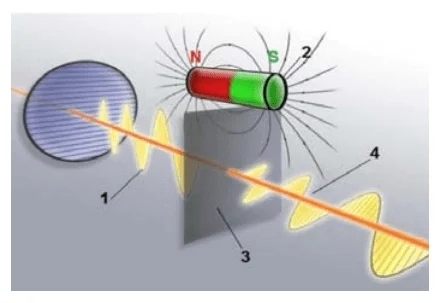
شکل ۲. عبور یک موج الکترومغناطیسی در حال انتشار از ماده فیبر شیشهای: ۱- موج الکترومغناطیسی با انتشار عادی؛ ۲- مغناطیس دائم؛ ۳- ماده فیبر نوری (سیلیکون کاربید)؛ ۴- موج الکترومغناطیسی برهمریخته.
همانطور که در شکل مشاهده میشود، وجود یک مغناطیس دائم در نزدیکی فیبر شیشهای، باعث تغییر قطبش نور و در نتیجه برهمریختن شکل موج سینوسی اصلی میشود. به عبارت دیگر، یک موج سینوسی جدید با اختلاف فاز نسبت به موج اولیه ایجاد میگردد. این اختلاف فاز در شکل ۳ نشان داده شده است.
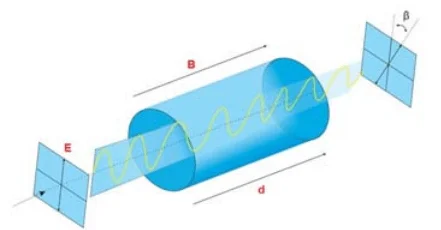
شکل ۳. زاویه اختلاف فاز بین دو موج سینوسی.
این زاویه اختلاف فاز بین دو موج، زاویه چرخش (rotation angle) نامیده میشود و با β نمایش داده میشود. مقدار آن از رابطه زیر به دست میآید:
(فرمول درج نشده است)
که در آن:
- v – سرعت نور در ماده;
- B – میدان مغناطیسی;
- d – طول مؤثر ماده فیبر نوری.
اندازهگیری دقیق این زاویه β، مقدار میدان مغناطیسی حاضر را مشخص میکند.
تغییرات میدان مغناطیسی بلافاصله توسط حسگر جریان نوری دریافت شده و به یک واحد پردازش مرکزی (Central Processing Unit) الکترونیکی منتقل میشود. پردازشگر با تحلیل این سیگنال، مقدار و جهت جریان الکتریکی جاری را با دقت بالا تعیین میکند [۵].
توسعه ایستگاههای برق دیجیتال و حسگرهای جریان نوری
اگرچه اثر فارادی پیشتر کشف شده بود، استفاده عملی و گسترده از آن در تکنولوژیهای ابزار دقیق به دو دهه اخیر بازمیگردد. حسگرهای جریان نوری نقش کلیدی در تکامل ایستگاههای برق دیجیتال (digital substations) ایفا کردهاند.
ایستگاه برق دیجیتال مفهومی است که در آن مدیریت و کنترل تجهیزات اصلی و کمکی به شیوهای هوشمند و دیجیتال انجام میشود. این ایستگاهها بر اساس استاندارد بینالمللی IEC61850 طراحی و اجرا میشوند. یکی از رایجترین طرحهای حسگر جریان نوری، حسگرهای حلقهای (ring sensors) است که بر روی بارهای اصلی (busbars) با ولتاژ بالا در ایستگاههای برق نصب میشوند. نمای این حسگرها در شکل ۴ آمده است [۶، ۱۴، ۱۹].
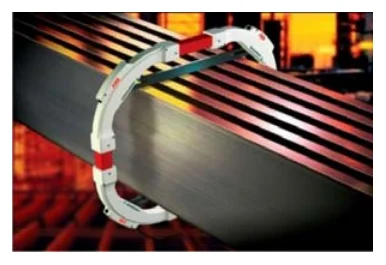
شکل ۴. حسگرهای حلقهای نصب شده بر روی بارهای اصلی با ولتاژ بالا.
مزایای اصلی حسگرهای جریان نوری در ایستگاههای برق
از مهمترین مزایای به کارگیری حسگرهای جریان نوری در محیطهای پستی میتوان به موارد زیر اشاره کرد:
- مقاومت بسیار بالا در برابر تداخلات مغناطیسی و شرایط محیطی سخت
- بیتأثری نسبت به پدیدههای ناخواستهای مانند فِرو رِزونانس
- قابلیت خود diagnostics و بازبینی مستمر وضعیت
- اندازهگیری دقیق حتی بالاترین هارمونیکهای شبکه
- کاهش چشمگیر ابعاد و وزن تجهیزات نسبت به نمونههای سنتی
- سادگی در نصب، راهاندازی و نگهداری به همراه ایمنی بالا
تأثیر بر شاخصهای شبکه برق در کشور
استقرار حسگرهای جریان نوری در ایستگاههای برق کشور (بهویژه در سطوح ولتاژ ۱۱۰ کیلوولت و بالاتر) میتواند بهبود قابل ملاحظهای در پارامترهای کلیدی عملکرد شبکه به همراه داشته باشد. مهمترین آثار آن عبارتند از:
- کاهش تلفات فنی در شبکه انتقال و توزیع
- افزایش قابلیت اطمینان و پایداری تأمین برق (شاخصهای SAIDI و SAIFI)
تلفات فنی در شبکههای برق عمدتاً به دلیل مقاومت هادیها و تأثیرات مغناطیسی تجهیزات ایجاد میشود و مدیریت آن همواره یکی از اولویتهای بهرهبرداران است. برای کاهش این تلفات، راهکارهایی نظیر بهبود تکنولوژی تجهیزات، نصب خازنهای جبرانکننده و اصلاح ضریب توان اجرا میشود.
فرض کنید در هر ایستگاه ۲۲۰/۱۱۰/۳۵ کیلوولت، ترانسفورماتورهای جریان سنتی با حسگرهای جریان نوری جایگزین شوند. با توجه به اینکه تلفات با تغییرات بار متغیر است، نتایج ذیل حاصل میشود:
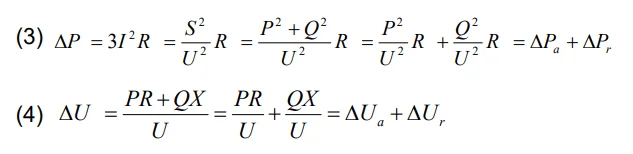
.
بدیهی است که امکان حذف کامل تلفات ناشی از توان اکتیو (active power) وجود ندارد.
اما بخش عمدهای از تلفات وابسته به توان راکتیو (reactive power) قابل کاهش است. این بخش از تلفات در تجهیزاتی که فرآیند مغناطیسی دارند (مانند ترانسفورماتورها و ترانسهای جریان سنتی) مشاهده میشود و بر تلفات کل شبکه تأثیر مستقیم میگذارد. نکته مهم آن است که در حسگرهای جریان نوری به دلیل عدم وجود هسته آهنی، تلفات توان راکتیو و پدیدههایی مانند اشباع مغناطیسی (saturation of the steel core) به طور کلی وجود ندارند [۷-۹].

.
علاوه بر کاهش تلفات، نصب حسگرهای جریان نوری تأثیر مثبت قابلتوجهی بر قابلیت اطمینان سیستم قدرت دارد.
دقت بالای اندازهگیری، ثبت دقیق دادهها و قابلیتهای تحلیلی پیشرفته این حسگرها، به صفر رساندن تعداد آلارمهای کاذب (false alarms) را ممکن میسازد. این امر مستقیماً بر کاهش شاخصهای SAIDI (تعداد و SAIFI (مدت زمان قطعی برق تأثیر میگذارد. شکل ۵ نحوه نصب این حسگرها بر روی پایهها در ایستگاههای برق را نشان میدهد [۱۰، ۱۵].
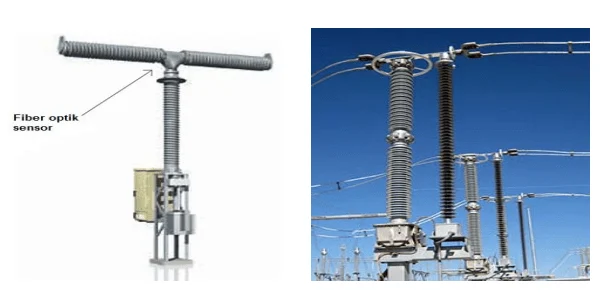
شکل ۵. نحوه نصب حسگرهای جریان نوری بر روی پایهها در ایستگاههای برق.
انواع ساختاری حسگرهای جریان نوری در ایستگاههای برق
با گسترش فناوری دیجیتال در ایستگاههای برق، شرکتهای متعددی اقدام به تولید ترانسفورماتورهای جریان حسگر نوری در اشکال و طرحهای مختلف کردهاند. سه نوع ساختاری اصلی و رایج که در ایستگاهها به کار میروند، در شکل ۶ نشان داده شده است.
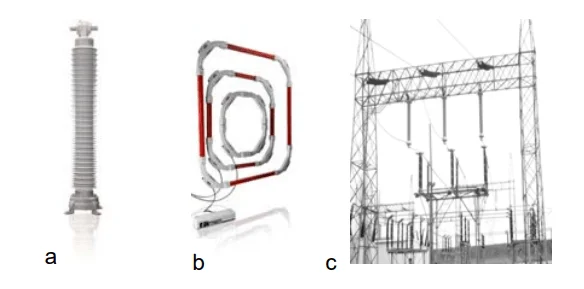
شکل ۶. اصلیترین انواع ساختاری حسگرهای جریان نوری: الف) نوع پایهمانند (support-like)؛ ب) نوع حلقهای (ring)؛ ج) نوع آویز (suspended).
We need to produce HTML fragment for PART 3, translating fully. Must include paragraphs, lists, blockquotes maybe, tables? The source includes sections: It seems headings: The source includes some headings like “Conclusıon” (typo). There’s also references list. We need to output HTML with allowed tags:
,,
,
- ,
- ,
- , , ,
,
,
, , . No
